
Arizona’s red rock country offers some of the most stunning hiking trails in the American Southwest. Towering formations like Cathedral Rock and Bell Rock create a dramatic backdrop for outdoor adventures. Whether you’re planning a leisurely walk or a challenging scramble, this desert landscape delivers unforgettable experiences.
This guide covers 12 carefully selected trails that showcase the area’s natural beauty. Each route includes round-trip distances, elevation gains, and difficulty ratings to help you plan your adventure. From family-friendly paths to strenuous climbs, there’s something for every skill level.
The region has grown incredibly popular in recent years. Trailhead parking lots often fill by 7 am during spring and fall seasons. Planning ahead ensures you’ll experience these spectacular red rock formations without the frustration of crowded lots.
Beyond the trails themselves, you’ll find excellent restaurants and comfortable accommodations nearby. This combination of world-class outdoor recreation and quality amenities makes it a premier destination for hikers across the United States.
Introduction to Sedona’s Hiking Landscape
The red rock country surrounding Sedona presents hikers with a distinctive landscape shaped by millions of years of natural forces. Located in central Arizona at approximately 4,500 feet elevation, this region sits within the Coconino National Forest and showcases some of the most dramatic sandstone formations in the Southwest. The area’s position on the Colorado Plateau created the geological foundation for what would become one of America’s premier desert hiking destinations.
Sedona’s geography features iconic landmarks that define the skyline and serve as navigation points for explorers. Cathedral Rock, Bell Rock, and Courthouse Butte stand as the most recognizable formations, while Munds Mesa, Thunder Mountain, Coffee Pot Mountain, and Bear Mountain offer equally spectacular scenery. These towering red rock structures rise hundreds of feet above the desert floor, creating a visual spectacle that changes color throughout the day.
The canyon systems winding through the region add another dimension to the hiking experience. Oak Creek Canyon carves through the landscape with a year-round creek that supports lush riparian vegetation. Fay Canyon and Boynton Canyon provide shaded corridors where hikers can escape the desert sun while exploring narrow passages between towering walls.
Trail diversity makes this a standout location for desert hiking enthusiasts of all skill levels. Terrain ranges from flat, sandy canyon floors perfect for casual walks to steep scrambles requiring hand-over-hand climbing. Some paths follow creek crossings through shaded groves, while others ascend to high mesa viewpoints offering panoramic vistas of the entire region.
The compact nature of Sedona’s hiking area provides exceptional convenience for visitors. Most trailheads sit within a 15-20 minute drive from the town center, allowing hikers to explore multiple locations during a single day. This accessibility means you can experience diverse environments—from desert scrubland to forested canyons—without extensive travel between sites.
Modern infrastructure supports the growing popularity of the best sedona hikes. Established trailheads feature parking facilities, restrooms, and clear signage. A free shuttle service now operates during peak seasons, reducing congestion at popular locations and making trails more accessible. The network of forest roads connects various regions, though some require high-clearance vehicles.
Sedona’s location approximately two hours from the Grand Canyon’s South Rim makes it an ideal base for exploring northern Arizona. The elevation provides comfortable conditions year-round, with temperatures generally milder than lower desert areas. This positioning in the heart of red rock country means every trail offers views of the distinctive iron oxide-stained formations that have made the region famous worldwide.
Why Sedona is a Hiking Paradise
Few places on Earth offer hikers the unique combination of natural beauty, trail variety, and year-round accessibility found in Sedona. This Arizona destination has become legendary among outdoor enthusiasts for good reason. The convergence of ancient geology, diverse ecosystems, and favorable climate creates hiking experiences that satisfy everyone from families with young children to seasoned adventurers seeking challenging scrambles.
Understanding what makes Sedona special helps you appreciate the best sedona hikes before you even hit the trail. Each element works together to create an environment where spectacular scenery meets practical accessibility. The result is a destination that delivers memorable experiences regardless of your fitness level or hiking expertise.
Ancient Rock Layers Tell Million-Year Stories
The stunning red rock formations that define Sedona’s landscape emerged from the Schnebly Hill Formation, a geological marvel created over 280 million years ago. These sandstone layers contain high concentrations of iron oxide, which oxidized over millennia to produce the vibrant red, orange, and pink hues that photograph so beautifully against Arizona’s deep blue skies. The colors shift throughout the day as sunlight angles change, creating an ever-changing canvas that makes every hike visually unique.
Differential erosion has sculpted the sandstone into distinctive shapes that have become iconic landmarks. Bell-shaped domes rise majestically from the valley floor, while vertical spires reach skyward like natural cathedrals. Balanced rocks perch impossibly on narrow pedestals, and natural arches frame distant vistas in ways that seem almost too perfect to be natural.
The same geological processes created hidden treasures throughout the hiking network. Slot canyons carved by water offer narrow passages where walls tower overhead, filtering sunlight into golden beams. Cathedral-like amphitheaters provide natural gathering spaces where ancient Sinagua people once lived and conducted ceremonies. Numerous caves dot the cliffs, including the Birthing Cave and Subway Cave, which attract visitors seeking both shelter and spiritual connection.
These formations aren’t just beautiful—they create the foundation for sedona vortex hikes that draw people from around the world. Many believe certain sites possess concentrated spiritual energy, adding a metaphysical dimension to the physical hiking experience.
Trails for Every Skill Level and Preference
Sedona’s trail network spans an impressive range, with routes varying from easy one-mile strolls to challenging 7.5-mile expeditions. Elevation gains range from gentle under-100-foot rises to strenuous 1,800-foot climbs that test even experienced hikers. This diversity means you can choose adventures perfectly matched to your abilities, time constraints, and energy levels on any given day.
The difficulty spectrum includes wheelchair-accessible paved paths for those with mobility limitations, flat dirt trails suitable for young children, moderate routes with some scrambling over rocks, and technical ascents requiring route-finding skills and comfort with exposure. Each category offers multiple options, so you’re never limited to a single trail type during your visit.
Beyond difficulty levels, Sedona’s trails traverse remarkably different ecosystems within relatively short distances. Riparian corridors along Oak Creek feature cottonwood and sycamore trees that provide cooling shade and support diverse wildlife. Higher desert landscapes showcase juniper and pinyon pine alongside various cacti species adapted to drier conditions. This ecological variety means you can experience distinctly different environments without traveling far from your base.
The terrain variety adds another dimension to your hiking choices. Shaded canyon walks offer respite from summer heat, while exposed mesa loops provide panoramic views in every direction. Creek-side strolls let you dip your feet in cool water, and technical rock scrambles challenge your agility and problem-solving skills. This range ensures the desert landscapes never feel monotonous, even for extended visits.
Hiking Adventures Available Every Season
Unlike many hiking destinations that close or become uncomfortable for significant portions of the year, Sedona welcomes visitors during all four seasons. The elevation and climate create conditions that allow year-round trail access, though each season offers distinct advantages and considerations. This extended accessibility makes Sedona particularly valuable for travelers with limited vacation flexibility.
Winter months bring comfortable temperatures averaging between 40 and 60 degrees Fahrenheit, perfect for hiking when northern regions face snow and ice. Occasional snow dusts higher peaks like Bear Mountain, creating photographic opportunities without making trails impassable. The cooler weather actually enhances endurance for longer hikes, and the reduced crowds compared to peak seasons mean better parking availability and more solitude on popular trails.
Spring and fall represent the most popular hiking seasons, with temperatures ranging from 60 to 80 degrees during March through May and September through November. These moderate conditions suit all-day adventures without heat concerns. Wildflowers bloom in spring, adding color to already vibrant landscapes, while fall brings golden cottonwood leaves along creek corridors. The tradeoff for perfect weather is increased visitation, requiring early morning starts to secure parking at trailheads for the best sedona hikes.
Summer temperatures frequently exceed 100 degrees Fahrenheit, which discourages some visitors but creates opportunities for those who plan strategically. Water-adjacent trails like West Fork become ideal destinations, offering shade and opportunities to wade in cool creek water. Early morning and evening hikes avoid the worst heat, and fewer crowds mean popular viewpoints feel more private. The intense summer light creates dramatic photography conditions during golden hour, when shadows deepen and colors intensify against the red rock formations.
The Best Easy Hikes in Sedona
Not every memorable hike requires hours of effort or technical climbing expertise. Sedona’s collection of easy sedona hikes proves that accessible trails can deliver just as much visual impact as their challenging counterparts. These beginner trails welcome families, first-time visitors, and anyone seeking spectacular red rock views without extreme physical demands.
The three trails featured here represent different approaches to easy hiking. One offers a quick but moderately challenging climb with iconic views. Another provides a gentle, extended walk around famous formations. The third creates a satisfying loop experience suitable for all ages and fitness levels.
A Quick Climb to Iconic Spires
The cathedral rock trail presents a beautiful contradiction—short distance with substantial reward. This 1.2-mile round trip journey packs impressive scenery into less than two hours of hiking time. The trailhead sits on Back O Beyond Road, where limited parking creates early morning competition among visitors.
Despite its classification as moderate difficulty, this route demands more physical effort than typical beginner trails. The 700 feet of elevation gain happens quickly through rock scrambling sections. Hikers navigate gullies by wedging feet into natural cracks and using hands for balance on steep sandstone surfaces.
The destination makes every challenging step worthwhile. A saddle between massive red rock spires offers panoramic views that photographers dream about capturing. Sunset transforms the landscape into glowing shades of orange and crimson, though morning light provides equally stunning conditions.
Practical considerations matter significantly for this popular trail. Parking lots fill by 6:15 am during peak seasons, forcing late arrivals to search for alternative spots. A Red Rock Pass costs $5 per day and remains mandatory for all visitors. Wet conditions create dangerously slippery rock surfaces, making dry weather essential for safe hiking.
Gentle Path Around Famous Formations
The bell rock pathway delivers an entirely different experience from its shorter neighbor. This 4-mile round trip route trades elevation challenge for distance, maintaining relatively flat terrain throughout the journey. The gentle approach makes it perfect for young children, older adults, and those preferring leisurely exploration.
Starting from Bell Rock Trailhead, the well-maintained path circles two of Sedona’s most recognizable landmarks. Bell Rock and Courthouse Butte dominate the landscape, their distinctive shapes changing perspective as hikers progress along the route. The 400 feet of elevation gain spreads gradually across the distance, creating minimal physical strain.
This pathway offers flexibility that busy families appreciate. Hikers can complete the full distance or turn back at any point without missing essential scenery. Numerous photo opportunities appear along the route, with each vantage point revealing new angles on the famous rock formations.
Adventure seekers can add optional side trails that climb Bell Rock itself for those wanting extra challenge. The main pathway remains accessible year-round, though summer temperatures recommend early morning or evening timing. The 1.5 to 2.5 hour completion time allows comfortable pacing without rushing.
Completing the Circle
Courthouse Butte Loop shares the same trailhead as the bell rock pathway but creates a distinct circular route. This 4-mile journey wraps around Courthouse Butte and Bell Rock, maintaining the same gentle 400-foot elevation profile. The loop format provides constantly changing scenery without retracing steps.
Local wisdom suggests hiking this trail clockwise to save the most impressive views for the final miles. The relatively flat terrain accommodates all ages and ability levels, making it ideal for multigenerational groups. Like its pathway cousin, this route typically requires 1.5 to 2.5 hours depending on pace and photo stops.
The combination of accessibility and scenery explains why these trails rank among Sedona’s most popular options. Visitors don’t need advanced skills or extreme fitness to experience the region’s geological wonders. These beginner trails prove that easy doesn’t mean ordinary when surrounded by ancient red rock formations sculpted over millions of years.
Moderate Hikes for the Adventurous
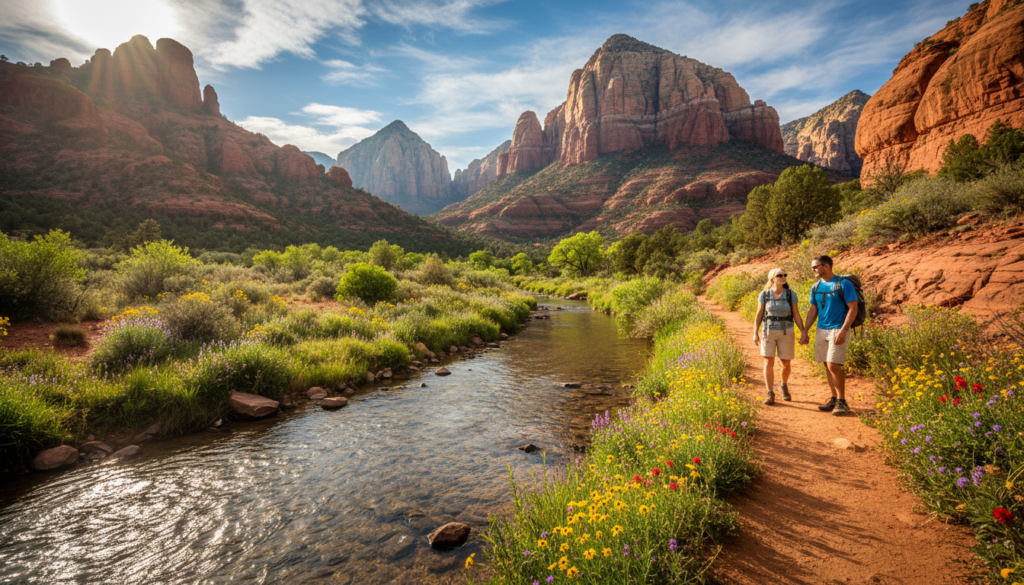
When you’re ready to extend your hiking adventure beyond two hours, these moderate trails reveal Sedona’s diverse ecosystems and hidden gems. These moderate sedona hikes require more stamina and time commitment than beginner options, but they reward your effort with unique landscapes and quieter paths. You’ll discover everything from lush creek corridors to canyon overlooks that feel worlds away from typical desert terrain.
The trails in this category typically span four to six miles round trip with modest elevation gains. They’re perfect for hikers who have mastered the basics and want fuller day experiences without technical climbing.
A Creek-Side Journey Through Red Rock Canyons
The west fork sedona trail stands apart from every other hike in the area. This six-mile round trip follows Oak Creek through a shaded canyon where cottonwood and sycamore trees create a natural canopy overhead. The creek has carved stunning passages through red and white sandstone, forming miniature slot canyons that resemble Zion’s famous Subway.
You’ll encounter multiple creek crossings throughout this adventure, sometimes on convenient stepping stones and other times wading through shallow water. The trail gains just 535 feet over three miles, making the elevation manageable for most hikers. Plan for three to five hours to complete the journey and bring shoes that can get wet.
This creek hiking experience shines brightest during summer months when cooling off in the water feels refreshing. Swimming opportunities appear at several points along the route where deeper pools form. The shaded environment also provides welcome relief from Sedona’s intense summer sun.
Avoid winter visits to West Fork Trail when ice and high water create hazardous conditions. The creek crossings become challenging and potentially dangerous during spring runoff or after heavy rains. Start your hike at the West Fork Oak Creek Trailhead, located along Oak Creek Canyon’s scenic drive.
Exploring the Canyon’s Shaded Paths
Beyond West Fork, the oak creek canyon trails system offers numerous shaded alternatives to exposed desert routes. This scenic canyon runs north from Sedona toward Flagstaff, creating a completely different hiking environment. The canyon walls provide natural shade throughout much of the day.
These trails appeal to hikers seeking cooler temperatures and the soothing sounds of flowing water. Many paths in this area remain accessible during summer when other Sedona trails become uncomfortably hot. The riparian ecosystem supports diverse wildlife including great blue herons, hawks, and occasional river otters.
Creek-adjacent trails in Oak Creek Canyon feature gentler grades than many exposed red rock routes. They’re ideal for moderate-intensity workouts without steep scrambles. The lush vegetation and water features create photography opportunities distinct from typical desert landscapes.
The Quieter Route to an Icon
The Mescal Trail provides an alternate approach to Devil’s Bridge for hikers without high-clearance vehicles or those preferring less crowded paths. Starting from Mescal Trailhead adds approximately two miles round trip compared to the standard Devil’s Bridge Trailhead route. This brings the total journey to four miles instead of two.
This longer approach offers significant advantages beyond just vehicle access. You’ll encounter fewer crowds on the Mescal connector, especially during peak tourist seasons. The trail winds through classic high desert terrain with juniper and pinyon pine forests.
The Mescal route also provides different perspectives on Sedona’s geological formations during your approach. While it extends your hiking time, the trade-off brings solitude and a greater sense of accomplishment. The trail eventually connects with the main Devil’s Bridge path for the final ascent to the famous natural arch.
These moderate sedona hikes demonstrate that Sedona’s trail system offers much more than exposed desert scrambles. From creek hiking adventures to shaded canyon walks and quieter connector routes, you’ll discover diverse ecosystems and varied terrain. Each trail provides unique rewards that justify the extra miles and time investment beyond easier options.
Challenging Hikes for Experienced Hikers
The red rocks hold secrets reserved for those with strong legs and stronger wills—challenging sedona hikes that demand respect and preparation. These strenuous trails separate casual walkers from dedicated adventurers through steep ascents, rugged scrambles, and sustained elevation gains. Each route rewards experienced hikers with breathtaking panoramas and the satisfaction of conquering Sedona’s most demanding terrain.
Before tackling these advanced trails, assess your fitness level honestly. Bring extra water, wear proper hiking boots, and start early to avoid afternoon heat. These routes require both physical endurance and mental determination to complete safely.
Devil’s Bridge Trail
Despite its moderate difficulty rating, Devil’s Bridge earns its place among challenging hikes due to trailhead access complications. The natural sandstone arch stands 54 feet high and ranks as Sedona’s most photographed landmark. Hundreds of visitors arrive daily to walk onto the bridge and capture dramatic images above sheer drops.
The trail itself covers 2 to 4 miles round trip depending on your starting point, with 400 to 500 feet of elevation gain. Most of the path remains relatively flat with some stone steps before reaching the bridge. The challenge lies in getting to the closest trailhead, which requires a high-clearance 4WD vehicle to navigate severely rutted, rocky roads.
Hikers without four-wheel drive have two alternatives. Start from Mescal Trailhead and add two miles to your journey, or park along Dry Creek Road and walk the 4WD road to reach the trail. Both options significantly increase distance and hiking time to 3 hours or more.
Plan to visit early morning or late afternoon when crowds thin and lighting improves for photography. Wait times to walk onto devil’s bridge sedona can exceed 30 minutes during peak hours. Never run or jump on the bridge, and supervise children closely near exposed edges.
Fitzpatrick Mountain Trail
This lesser-known route provides experienced hikers with solitude and substantial challenge. Fitzpatrick Mountain Trail delivers steep terrain and rugged conditions without the crowds found on more popular paths. The trail requires solid navigation skills and comfort with exposure on rocky sections.
Hikers seeking alternatives to busy trails will appreciate the peaceful atmosphere. The route rewards effort with excellent views of Sedona’s red rock formations from unique vantage points. Pack plenty of water and allow extra time for the strenuous sections.
Bear Mountain Trail
Recognized as Sedona’s toughest hike, Bear Mountain Trail packs 1,800 feet of total elevation gain into just 5 miles round trip. The relentless ascent never lets up, making this the most demanding route despite shorter distance compared to other strenuous trails. Even experienced hikers need 4 to 6 hours to complete the journey.
The path climbs over three false summits before reaching the true peak. Each steep section tests your endurance and leg strength. The rocky surface provides excellent traction, making bear mountain trail ideal after rain when other Sedona paths turn muddy and slippery.
From the summit, panoramic views stretch across red rock country in all directions. One side overlooks Fay Canyon with its deep crimson walls and dramatic formations. The opposite vista reveals desert landscapes extending to the San Francisco Peaks near Flagstaff.
Bear Mountain ranks among the tallest peaks in Sedona, offering unmatched 360-degree scenery. An “end of trail” sign marks the official summit. The steep, rocky trail continues with multiple uphills that challenge even seasoned mountaineers throughout the ascent.
These challenging routes demand proper preparation and realistic self-assessment. Start with moderate trails to build familiarity with Sedona’s terrain before attempting these strenuous options. The rewards—solitude, achievement, and spectacular views—make every difficult step worthwhile for those ready to push their limits.
Iconic Views: Best Scenic Hikes
Some trails deliver breathtaking views with minimal effort, and Sedona’s scenic viewpoints perfectly balance accessibility with spectacular panoramas. These photography spots attract visitors seeking iconic images without tackling strenuous terrain. Whether you’re chasing sunset colors or capturing morning light, these sedona vortex hikes provide maximum visual reward for moderate physical investment.
The trails in this category stand out for their panoramic vistas that showcase multiple landmarks simultaneously. You’ll find yourself surrounded by Sedona’s signature formations from elevated vantage points. These routes work perfectly for visitors with limited time who still want memorable experiences.
Circle the Mesa for 360-Degree Panoramas
The Airport Mesa Loop delivers comprehensive views of virtually every famous formation in the Sedona area. This 3-mile trail circles the rim of a shrub-covered mesa just south of town, offering a constantly changing perspective as you walk. The 400-foot elevation gain qualifies this as an easy hike that most visitors can complete in about two hours.
From the Airport Mesa Trailhead, you’ll access scenic viewpoints that reveal Cathedral Rock, Bell Rock, Courthouse Butte, Munds Mesa, and Thunder Mountain in a single sweep. The open terrain means unobstructed sightlines in every direction. You can see the town of Sedona nestled among the red rocks below, providing context for the landscape’s scale.
A short spur trail called Summit Trail leads from the trailhead to the highest point on the mesa. Here’s a time-saving strategy: hike clockwise from the Summit Trail and walk just half a mile to capture the best views of Cathedral Rock and Courthouse Butte. Then simply retrace your steps rather than completing the full loop.
This abbreviated route lets you experience the trail’s highlights in under an hour. The exposed mesa top can be windy during any season and quite hot in summer months. Morning and late afternoon provide the best lighting conditions for photography spots along this trail.
Arizona’s Most Photographed Vista
Red Rock Crossing features the second most photographed view in Arizona—Cathedral Rock perfectly mirrored in Oak Creek’s tranquil waters. This iconic scene has graced countless postcards, calendars, and social media feeds. Recent flood damage has created access challenges that visitors should understand before planning their trip.
The natural rock stepping stones that allowed creek crossing from the usual Crescent Moon Ranch starting point washed away during heavy flooding. While the trail currently remains closed from this traditional access point, the famous viewpoint itself stays accessible. The $10 per car entry fee applies at Crescent Moon Ranch, located 7 miles from Sedona, and this charge applies even to National Parks pass holders.
Alternative access options exist for those wanting to avoid the fee or access restrictions. The Baldwin Trail provides an alternate route to reach this photography spot. You can also approach from Verde Valley School Road, which sits 12 miles from Sedona and requires about 20 minutes of driving time.
Beyond its visual appeal, this location holds special significance for those interested in sedona vortex hikes. A vortex site sits approximately 10 minutes’ walk from the parking area, attracting visitors seeking Sedona’s reputed energy centers. Many people combine their photography session with a visit to this spiritual landmark.
The combination of Oak Creek’s flowing water and Cathedral Rock’s towering presence creates a scene that changes with seasonal water levels and lighting conditions. Early morning provides calm water for the best reflections, while late afternoon bathes the rocks in warm, golden light that enhances the red rock colors.
Family-Friendly Hikes in Sedona
Family hiking in Sedona transforms into unforgettable adventures with the right trail selection. The region offers numerous kid-friendly trails that deliver genuine red rock experiences without overwhelming young hikers. These paths combine manageable distances with features that keep children engaged and excited throughout the journey.
The best family routes typically span 2 to 4 miles in length with elevation gains under 400 feet. This sweet spot allows kids to feel accomplished without becoming exhausted or frustrated. Many trails also include natural play elements like rock scrambling opportunities, shaded canyon walks, or cave exploration that transform hiking into adventure.
Parents planning easy sedona hikes with children should consider starting early in the day to avoid heat and crowds. Bringing plenty of snacks and water makes a significant difference in keeping energy levels high. Allow extra time for exploration and spontaneous discoveries along the way.
Bell Rock Adventures for Young Climbers
The bell rock pathway offers exciting scrambling opportunities perfectly suited for families with adventurous kids. The first quarter-mile features clearly marked trail signs and wire baskets filled with rocks to guide your route. This well-defined section gives children confidence as they begin their climb.
As you ascend higher on Bell Rock, the wire baskets disappear but families can continue with basic route finding. The entire experience covers 1 mile round trip with 400 feet of elevation gain. Part of the appeal is the rock scrambling that lets kids test their climbing skills on solid, textured surfaces.
You cannot reach the very top of Bell Rock, but families can climb quite far up the formation. The varied terrain keeps children engaged as they navigate different rock features. Many families make this a regular destination because kids love the climbing challenge and the sense of achievement.
Fay Canyon’s Shaded Family Walk
Fay Canyon provides one of the most relaxing kid-friendly trails in the Sedona area. This 2-mile round trip follows an easy, flat sandy path through a beautiful canyon. Trees provide welcome shade while glimpses of red rock cliffs peek through the foliage.
The trail ends at the back of the canyon marked by an “End of Trail” sign. Families seeking a bit more adventure can explore an optional spur leading to Fay Canyon Arch. The gentle terrain makes this perfect for younger children who need easier conditions but still want a genuine canyon experience.
Birthing Cave Exploration
The Birthing Cave hike combines an easy approach with the thrill of cave exploration. This 2-mile adventure features 250 feet of elevation gain and typically takes 1 to 2 hours to complete. The trailhead begins at Long Canyon with a relatively flat hike to reach the cave area.
The final section becomes steeper as you climb up to the cave mouth itself. Inside the large shallow cave, kids can safely scramble up onto the walls. The first ledge sits just 3 to 4 feet high, making it accessible for most children with proper supervision.
This location serves as a great photography spot for families. Wide-angle lenses or smartphone panoramic modes capture the cave’s impressive size and red rock surroundings. The unique geological feature creates lasting memories for young explorers.
Little Horse Trail
Little Horse Trail stands out among easy sedona hikes for its consistent beauty and manageable terrain. This 2.6-mile path gains just 265 feet in elevation, creating a relatively flat hiking experience. The well-maintained surface makes it suitable for families with varying fitness levels.
The trail’s designation as a multi-use path means families might encounter mountain bikers along the route. Kids often enjoy watching riders navigate the terrain, though parents should maintain awareness and step aside when bikers approach. The shared-use nature adds an element of excitement without compromising safety.
Pretty red rock views appear consistently throughout the hike, holding children’s attention from start to finish. Families typically complete this trail in 2 to 3 hours when including snack breaks and exploration time. The moderate length provides enough adventure without testing the patience of younger hikers.
Additional Family Hiking Options
Sycamore Canyon Trail offers another excellent choice for families seeking kid-friendly trails with diverse scenery. The path provides opportunities to see different vegetation zones and occasional wildlife sightings. This trail works well for families who have already explored the more popular routes.
When selecting trails for family hiking sedona adventures, consider your children’s ages and energy levels. Trails with interesting features like rock formations, water crossings, or wildlife viewing areas keep young minds engaged. The journey matters more than reaching any specific destination.
Summer visitors should prioritize trails with shade options to keep everyone comfortable. Spring and fall provide ideal temperatures for longer family hikes. Winter months can work well too, though checking trail conditions beforehand prevents unexpected challenges.
Tips for Successful Family Hikes
Pack more snacks than you think necessary for children on the trail. Energy bars, fruit, and crackers provide quick fuel for active kids. Hydration becomes especially important in Sedona’s dry climate, so bring plenty of water for everyone.
Give kids a sense of ownership by letting them carry small backpacks with their own supplies. This involvement increases their investment in completing the hike. Simple nature scavenger hunts or photo challenges can transform ordinary walks into exciting quests.
Build flexibility into your hiking plans by being willing to turn back early if needed. Some days kids have boundless energy while other times they tire quickly. The goal is creating positive outdoor experiences that make children eager for future adventures, not pushing them beyond their limits.
Family-friendly does not mean boring when exploring Sedona’s trails. These routes deliver authentic red rock experiences scaled appropriately for younger hikers. With proper planning and realistic expectations, families create lasting memories while introducing children to the wonders of hiking.
Safety Tips for Hiking in Sedona
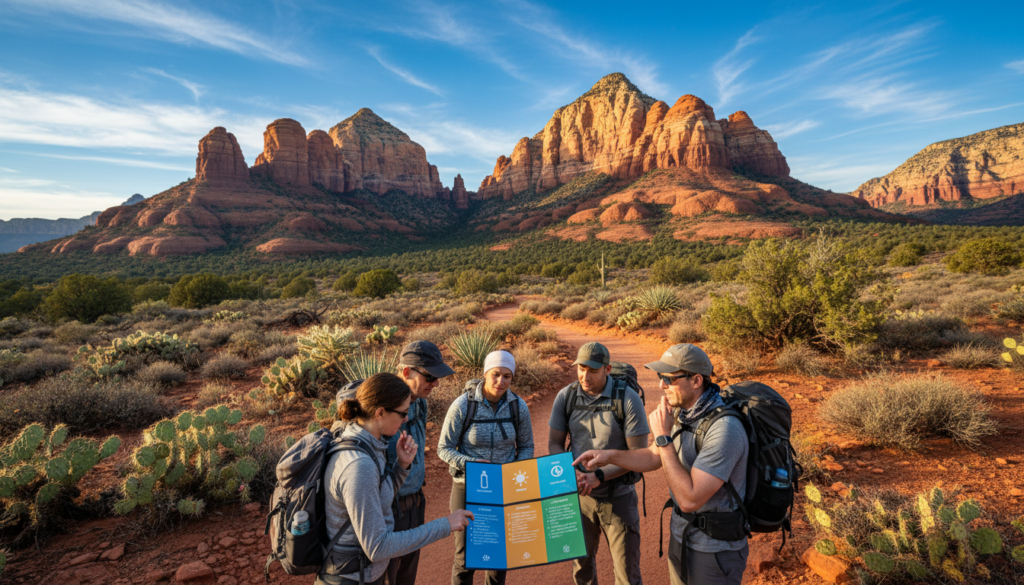
The dramatic beauty of Sedona’s hiking trails comes with unique challenges that every hiker should understand before setting foot on the path. Desert conditions at 4,500 feet elevation create situations that differ significantly from hiking in other environments. Smart preparation and awareness of hiking safety essentials make the difference between memorable adventures and dangerous situations.
Before exploring the best Sedona hikes, familiarize yourself with permit requirements and access information. Most trailheads require a Red Rock Pass, which costs $5 per day or $15 for one week. You can purchase passes at trailhead fee machines using credit cards only, or use an America the Beautiful Pass as an alternative.
Parking presents another challenge worth planning around. Popular trailheads fill by 7 am, with Cathedral Rock’s last spaces disappearing by 6:15 am during peak season. Consider arriving very early or hiking between 3:30 pm and 7:00 pm for better parking availability and fewer crowds.
Sedona offers a free shuttle service Thursday through Sunday from 7 am to 5:30 pm. This service reaches popular trailheads including Devil’s Bridge, Soldier Pass, Cathedral Rock, and Little Horse, helping reduce traffic congestion while ensuring trail access.
Water and Hydration Essentials
Desert hiking demands significantly more water than most people expect, even during cooler months. Sedona’s high elevation and low humidity accelerate dehydration, while exposed trails intensify heat reflection from red rock surfaces. These desert hiking tips could prevent serious health emergencies on the trail.
Carry at least one liter of water per person per hour during warm months. Cooler periods still require at least half that amount. Many Sedona trails offer no shade and no water sources, making adequate supplies critical for safety.
Recognize dehydration warning signs early. Headaches, dizziness, fatigue, and dark urine indicate your body needs water immediately. Don’t wait until you feel thirsty—that sensation means dehydration has already begun.
Start hikes already well-hydrated by drinking water the night before and morning of your adventure. Drink regularly throughout your hike rather than waiting for thirst signals. For longer excursions, bring electrolyte supplements to replace minerals lost through sweating.
Understanding Weather Patterns
Sedona’s weather conditions vary dramatically across seasons and even within single days. Understanding these patterns represents essential trail precautions that protect hikers from dangerous situations.
Summer temperatures regularly exceed 100°F, making early morning or evening hiking absolutely essential. Midday heat creates serious risk of heat exhaustion and heat stroke. Plan summer hikes to finish by 10 am or start after 4 pm.
Afternoon monsoon thunderstorms arrive between July and September, often developing quickly with little warning. These storms create dangerous lightning exposure on exposed ridges and sudden flash floods in canyons and washes. Check detailed forecasts before hiking and avoid slot canyons when storms threaten.
Winter usually offers ideal hiking temperatures but brings occasional challenges. Snow and ice make some trails treacherous, particularly those involving rock scrambling like Cathedral Rock. Wet conditions transform normally secure surfaces into dangerously slippery obstacles.
Some trails shouldn’t be attempted when wet. Cathedral Rock becomes extremely hazardous as the rock surface offers almost no traction in rain. Bear Mountain, however, works well after rain since much of the path consists of grippy rock rather than smooth slickrock.
Always check weather conditions and trail suitability before departing. Be prepared to turn back if conditions deteriorate during your hike—summit views aren’t worth serious injuries.
Respecting Trails and Fellow Hikers
Proper trail etiquette protects Sedona’s fragile desert environment while ensuring positive experiences for all visitors. Following established guidelines demonstrates respect for nature and other hikers pursuing the best Sedona hikes.
Practice the seven principles of Leave No Trace:
Plan ahead and prepare properly. Stay on established trails to prevent erosion and vegetation damage. Pack out everything you bring in, including organic items like banana peels and apple cores that don’t belong in desert ecosystems.
Leave areas exactly as you found them. Minimize campfire impacts by using existing fire rings only where permitted. Be considerate of other hikers by keeping voices moderate and yielding appropriately on multi-use trails.
Never approach, feed, or harass wildlife. Sedona’s ravens, javelinas, deer, and elk should be observed from respectful distances. Feeding wildlife disrupts natural behaviors and creates dangerous situations for future visitors.
Many trails pass near residential areas where respecting private property boundaries becomes important. Stay on marked paths and avoid trespassing on adjacent lands.
These desert hiking tips help preserve Sedona’s natural beauty for future generations. The area’s popularity brings responsibility—each hiker’s actions either protect or degrade this remarkable landscape.
Sound judgment about personal capabilities matters tremendously. Choose trails matching your fitness level and experience. Don’t hesitate to turn back if a trail becomes too difficult or conditions seem unsafe. The rocks will still be here for your next visit.
Best Time to Hike in Sedona
Seasonal shifts transform Sedona’s hiking landscape, creating distinct advantages for visitors throughout the year. The best time to visit depends on your priorities—whether you value perfect weather, smaller crowds, or specific trail conditions. Understanding how sedona weather patterns change helps you plan the ideal hiking adventure among the best sedona hikes.
Each season offers unique experiences on Sedona’s trails. The red rocks look dramatically different under spring wildflowers, summer monsoon clouds, fall foliage, and winter’s crisp light.
Seasonal Weather Patterns
Spring arrives in Sedona from March through May with gradually warming temperatures. March typically sees daytime highs in the 60s, while May can reach the upper 80s, previewing summer heat. This season brings desert wildflowers blooming at lower elevations and cacti displaying vibrant flowers across the landscape.
Mornings in March still require layers, but afternoons warm quickly under the desert sun. Water features from winter snowmelt begin diminishing by late May, though creeks generally maintain flow through spring.
Summer spans June through August with intense heat. Daytime temperatures routinely climb between 95 and 105°F, making morning-only hiking advisable for exposed trails. However, this season creates perfect conditions for shaded creek hikes where wading and swimming provide welcome relief.
The monsoon pattern typically begins in July, bringing dramatic afternoon thunderstorms. These storms cool temperatures but create lightning danger and flash flood risk that hikers must respect. Rain usually arrives between 2:00 and 6:00 pm during peak monsoon weeks.
Fall reverses spring’s temperature pattern from September through November. Hot September days gradually cool through October into comfortable November weather. Cottonwood and sycamore trees along creeks turn brilliant yellow and gold, creating stunning photography opportunities on water-adjacent trails.
This season offers some of the year’s most beautiful hiking conditions. Temperatures moderate while skies remain mostly clear, providing excellent visibility of the red rock formations.
Winter surprises many visitors with its hiking viability from December through February. Daytime highs typically reach 50 to 60°F under brilliant sunshine, though mornings can drop below freezing. Higher elevations occasionally receive snow, adding dramatic white contrast to red rocks.
Winter hiking requires flexibility as trail conditions change after storms. Cathedral Rock and other scrambling routes become dangerous when wet or icy, while rock-based trails like Bear Mountain perform well after rain.
Popular Hiking Months
Peak hiking seasons run from March through May and September through November when weather conditions are ideal. These months bring genuinely perfect temperatures for all-day hiking, with mild conditions and low precipitation making even challenging trails comfortable.
However, peak season means significant crowds at the best sedona hikes. Parking lots at popular trailheads like Devil’s Bridge and Cathedral Rock fill before 7:00 am on weekends. Visitors often wait in line for photos at iconic spots, and continuous foot traffic diminishes the wilderness experience.
Strategic planning helps peak-season visitors avoid crowds. Arriving before sunrise secures parking and provides cooler temperatures for hiking. Choosing less-famous trails offers equally stunning scenery without the congestion. Weekday hiking significantly reduces encounters compared to weekends.
The free shuttle system serves popular trailheads during peak months, eliminating parking challenges entirely. This option works particularly well for trails along the Highway 179 corridor.
Off-peak months from June through August and December through February offer significantly smaller crowds and readily available parking. Summer requires heat tolerance and strategic trail selection, prioritizing shaded routes and water-adjacent paths where cooling is possible.
Winter demands flexibility as some trails become temporarily unsuitable after storms. West Fork Trail, for example, is not recommended in winter due to high water flow, ice, and numerous creek crossings that become hazardous.
Trail-specific timing enhances your experience considerably. West Fork Trail peaks during fall color season and provides summer cooling through creek wading. Cathedral Rock and Bell Rock shine during golden hour year-round but require dry conditions for safe scrambling.
Bear Mountain and other exposed trails are best tackled during cooler months when shade is limited. Vortex sites like Airport Mesa and Red Rock Crossing draw crowds at sunrise and sunset regardless of season, so timing your visit for mid-morning or mid-afternoon often provides better solitude.
Ultimately, the best time to visit Sedona for hiking aligns with your personal preferences. Weather perfectionists choose spring or fall despite crowds. Heat-tolerant hikers find summer’s early mornings rewarding with minimal competition for parking. Those seeking solitude and mild temperatures discover winter’s unexpected advantages across many of the best sedona hikes.
Recommended Gear for Sedona Hikes
Having the right equipment makes all the difference when tackling the best Sedona hikes, from simple nature walks to demanding scrambles. The desert environment presents unique challenges that require specific hiking gear to ensure comfort and safety. Your preparation directly impacts how much you’ll enjoy exploring Sedona’s stunning red rock formations.
Quality trail equipment protects you from intense sun exposure, sudden temperature changes, and rugged terrain conditions. Investing in proper gear pays dividends through enhanced comfort and reduced injury risk. The right items transform potentially difficult situations into manageable experiences on the trail.
Choosing the Right Shoes for Red Rock Terrain
Footwear represents your most critical gear decision when planning Sedona adventures. The terrain varies dramatically across different trails, demanding appropriate shoe selection based on your chosen route. Poor footwear choices lead to discomfort, blisters, and potential safety hazards on challenging sections.
For technical trails involving rock scrambling and elevation gain, hiking boots with ankle support and aggressive tread provide essential stability. Routes like Cathedral Rock, Bell Rock, and Bear Mountain demand boots that grip slickrock surfaces and protect ankles on uneven terrain. The additional support prevents rolled ankles when navigating loose rocks and steep descents.
Water-based hikes like West Fork Trail require different footwear considerations entirely. Hiking sandals with supportive footbeds and rugged soles excel in creek environments where feet repeatedly get wet. These specialized sandals dry quickly while maintaining traction on slippery rocks, making them ideal for multiple water crossings.
Well-maintained easier trails like Airport Mesa Loop and Bell Rock Pathway work perfectly with trail running shoes or quality sneakers. These lighter options provide adequate grip without the weight and warmth of full boots. However, ensure your chosen footwear features genuine tread patterns rather than smooth soles.
Avoid fashion sneakers, casual sandals, or flip-flops on any Sedona trail. These inadequate options provide insufficient traction on slickrock and loose dirt surfaces. Children benefit significantly from proper hiking boots on longer routes, preventing blisters and providing necessary foot protection.
Dressing for Desert Conditions
Sedona’s desert environment demands thoughtful clothing choices that address sun exposure and temperature fluctuations. Layering systems provide versatility as conditions change throughout your hike. The right clothing protects your skin while keeping you comfortable across varying elevations and shade conditions.
Choose moisture-wicking base layers made from synthetic materials or merino wool rather than cotton. Cotton retains moisture and causes uncomfortable chafing during extended activity. Lightweight long sleeves and pants offer superior sun protection compared to shorts with sunscreen, while also shielding skin from scratchy vegetation.
A wide-brimmed hat protects your face and neck from intense overhead sun throughout the day. Quality sunglasses reduce glare from bright rock surfaces that can cause eye strain. These simple accessories dramatically improve comfort on exposed trail sections.
Pack a lightweight insulating layer even during warm weather months. Temperatures drop quickly in shaded canyons and at higher elevations. A windbreaker or packable rain jacket becomes essential during monsoon season when afternoon storms develop rapidly.
Staying on Track With Navigation Essentials
Sedona’s complex trail network features numerous intersecting paths where navigation becomes crucial. Multiple navigation tools provide backup options when technology fails or signals become unreliable. Proper preparation prevents getting lost and ensures you reach trailheads before dark.
Download offline trail maps to your smartphone before leaving cellular service areas. GPS signals weaken considerably in deep canyons where rock walls block satellite connections. Physical maps from visitor centers provide reliable backup when electronic devices fail or batteries die.
Carry a basic compass for directional reference if you venture off established trails. Fully charge your phone before each hike and consider bringing a portable battery pack. These simple precautions prevent navigation emergencies in remote areas.
Additional trail equipment enhances safety and comfort across various hiking conditions. Trekking poles reduce knee strain on steep descents and provide balance on uneven terrain. Headlamps or flashlights become essential if you misjudge hiking time and face darkness before reaching your vehicle.
Pack a comprehensive first aid kit with blister treatment and wound care supplies. Apply high-SPF sunscreen generously and reapply every two hours during sun exposure. Insect repellent helps in wooded creek areas where bugs congregate near water sources.
For families exploring the best Sedona hikes together, child carriers allow toddlers to enjoy trails beyond their walking abilities. Appropriately sized kids’ backpacks encourage children to carry their own water and snacks. Hydration systems with drinking tubes promote frequent fluid intake, especially important in dry desert air.
Quick-dry towels serve multiple purposes from creek crossings to emergency situations. Camera equipment captures memorable vistas but should be carried securely to prevent drops on rocky sections. A carry-all backpack for day hikes should hold at least one liter of water per person plus all essential gear comfortably.
Preserving Sedona’s Natural Beauty
The breathtaking landscapes along the best Sedona hikes depend on responsible visitor practices to remain pristine for future generations. With millions of visitors annually, the cumulative impact on fragile desert ecosystems and archaeological resources creates significant environmental pressures. Every hiker has the power to protect these remarkable red rock formations through conscious, low-impact practices.
The desert environment appears rugged and resilient, but appearances can deceive. This ecosystem contains incredibly fragile elements that take decades or even centuries to recover from damage. Understanding how your actions affect the landscape transforms a simple hike into an act of stewardship.
Protecting Trails Through Responsible Practices
The Leave No Trace principles provide a framework for minimizing environmental impact during outdoor recreation. These seven guidelines help preserve natural areas while allowing people to enjoy them. Applying these principles specifically to Sedona hiking protects both the landscape and your experience.
Planning ahead and preparing forms the foundation of responsible hiking. Research trails to match your fitness level and abilities. Check current weather conditions and trail status before heading out. Bring adequate water, snacks, and emergency supplies to avoid creating problems that damage the environment.
When unprepared hikers face difficulties, they often create shortcuts or impromptu campsites. This unplanned activity causes unnecessary damage to desert ecology and accelerates erosion problems already affecting high-use areas.
Staying on established trails represents one of the most critical trail conservation practices. Social trails—unofficial paths created by hikers cutting switchbacks or exploring off-trail—cause severe erosion and vegetation loss. Sedona’s red soil erodes particularly easily once protective vegetation is disturbed.
The dark, bumpy crust visible on undisturbed desert soil is cryptobiotic soil. This living biological layer stabilizes soil, prevents erosion, and provides nutrients for plant growth. A single footprint can destroy crust that took 50 to 100 years to develop.
Stick to designated paths even when trails become muddy or crowded. Walking around obstacles widens trails and multiplies environmental damage.
Packing out all waste keeps trails clean and protects wildlife. Carry trash bags for your garbage, including seemingly harmless organic items like banana peels and apple cores. These items don’t naturally occur in the desert and take surprisingly long to decompose while attracting nuisance animals.
Most Sedona day hikes offer trailhead restrooms. Use these facilities before starting your hike. If emergencies arise on the trail, properly dispose of human waste by burying it in a cathole at least 200 feet from water sources and trails.
Leaving what you find protects both natural features and archaeological treasures. Many Sedona trails pass ancient Sinagua ruins and rock art sites. Every artifact provides irreplaceable archaeological information about past cultures. Removing or disturbing these objects destroys scientific value and violates federal law.
This principle also means not creating rock cairns or stacks. These structures confuse trail navigation, damage habitat, and detract from the natural landscape. Leave rocks, plants, and natural objects undisturbed.
Minimizing campfire impacts primarily applies to backcountry camping, though some overnight hiking options exist near Sedona. Many areas prohibit campfires entirely due to wildfire risk. Using camp stoves instead of fires protects vegetation and prevents accidental wildfires in this arid desert ecology.
Being considerate of other visitors enhances everyone’s experience. Keep dogs on leashes where required and under control at all times. Yield appropriately on trails—hikers moving uphill have right of way, and mountain bikers yield to hikers. Keep noise levels moderate and avoid playing music without headphones.
Reckless behavior like climbing on fragile formations or getting too close to cliff edges creates unsafe conditions. Respect others’ desire for peaceful nature experiences.
Understanding Wildlife Interactions
Respecting wildlife protects both animals and people. Sedona’s desert environment supports diverse species that hikers may encounter. Understanding proper responses to wildlife keeps you safe while preserving natural animal behaviors.
Javelinas, pig-like mammals native to the Southwest, occasionally appear on trails. These animals typically avoid humans but can act defensively if surprised or cornered. Give them wide berth and never approach or attempt to feed them.
Ravens display remarkable intelligence and will raid unattended backpacks for food. These opportunistic birds quickly learn to associate hikers with easy meals. Secure your pack and never intentionally feed wildlife.
Deer and elk sometimes appear near water sources along trails. While generally docile, these large animals deserve respectful distance. During mating season, males become more aggressive and unpredictable.
Mountain lion encounters remain extraordinarily rare, but these predators do inhabit the region. If you encounter one, maintain eye contact, make yourself appear larger, and back away slowly. Never run, as this triggers predatory instincts.
Never feed wildlife under any circumstances. Feeding habituates animals to humans, disrupts natural feeding behavior, and creates aggressive behavior toward future hikers. Animals that become too comfortable around people often must be relocated or destroyed.
Store food securely even during short breaks on day hikes. Keep snacks in closed containers inside your pack. Clean up thoroughly after eating, packing out all food scraps and wrappers.
If wildlife approaches, make noise to discourage them without aggressive actions. Back away slowly while facing the animal. Most wildlife encounters resolve peacefully when humans give animals space and avoid threatening behavior.
Protecting Sedona’s natural beauty requires commitment from every person who walks these trails. The best Sedona hikes remain spectacular because generations of visitors have practiced conservation. Your adherence to these principles ensures these landscapes stay unspoiled for future adventurers to discover and cherish.
Local Resources for Hikers
Whether you’re a first-time visitor or returning adventurer, Sedona’s local hiking resources provide essential planning support. Taking advantage of these tools and services helps you choose appropriate trails, stay safe, and maximize your time exploring the red rocks. From official information centers to digital navigation apps, multiple options exist to enhance your hiking experience.
Smart preparation makes the difference between a frustrating outing and an unforgettable adventure. The right sedona visitor information helps you avoid crowded trails, understand current conditions, and discover hidden gems that match your interests and abilities.
Getting Information at Official Centers
The Sedona Chamber of Commerce Visitor Center in Uptown Sedona serves as your primary resource hub. Located at the junction of State Route 89A and Forest Road, this center provides detailed trail maps, current condition reports, and knowledgeable staff who recommend hikes based on your fitness level and available time.
Staff members can explain which trails require a Red Rock Pass and help you understand permit requirements. The pass costs $5 per day or $15 per week, available at trailhead fee machines that accept credit cards only. If you hold an America the Beautiful Pass, it works as an alternative to the Red Rock Pass.
The Red Rock Ranger District Office offers specialized expertise on backcountry conditions and wilderness regulations. Rangers provide valuable insights about less-traveled trails and can share information about the Sinagua people who inhabited this region centuries ago. Both centers sell passes and update visitors on trail closures or weather concerns.
Exploring Options with Expert Guides
Guided tours offer significant advantages for visitors wanting deeper knowledge or preferring group experiences. Naturalist-guided hikes led by rangers and non-profit organizations focus on ecology, geology, and natural history, providing educational value beyond self-guided exploration.
Commercial guide services range from beginner-friendly nature walks to advanced scrambling adventures. These companies employ experienced guides who know optimal routes, safety protocols, and fascinating stories about the landscape. Photography tours time outings for the best lighting conditions and teach composition techniques at iconic viewpoints.
Specialized vortex tours cater to visitors interested in Sedona’s metaphysical reputation. Jeep tours combine off-road adventure with hiking by accessing remote trailheads via rough 4WD roads. Some operators offer combination experiences pairing hiking with wine tasting or hot air ballooning.
While guided experiences cost more than independent hiking, they provide expertise, transportation, safety oversight, and educational context. Many visitors find the investment worthwhile, especially for first-time trips or challenging destinations.
Using Maps and Digital Navigation Tools
Quality trail resources come in both physical and digital formats. The National Geographic Trails Illustrated map covering Sedona and Oak Creek Canyon provides detailed topographic information, available at visitor centers, outdoor retailers, and online. Free basic maps from visitor centers and trailhead kiosks show major routes and parking areas.
The AllTrails app has become essential for modern hikers. It offers GPS-enabled navigation, user reviews, recent photos, and real-time trail tracking. The Hiking Project website provides similar crowd-sourced information with difficulty ratings and seasonal recommendations. Both platforms help you research trails like soldier pass trail, which covers 4.5 miles with 800 feet of elevation gain and takes 2-4 hours to complete.
This popular route features Seven Sacred Pools, the Devil’s Kitchen sinkhole, and Soldier Pass cave. Another top destination, boynton canyon, extends 7.5 miles when including the Vista Trail and Subway Cave additions. With 1,300 feet of elevation gain requiring 4.5-6.5 hours, this mostly flat trail winds through a sheltered canyon ending at spectacular viewpoints.
The Sedona Shuttle offers free transportation to major trailheads Thursday through Sunday from 7 am to 5:30 pm. Routes serve popular destinations including Dry Creek Trailhead for Devil’s Bridge access, Soldier Pass Trailhead, Cathedral Rock Trailhead, and Little Horse Trailhead. Real-time arrival updates are available online, though schedules continue evolving based on demand.
This shuttle system reduces traffic congestion and parking challenges at busy trailheads. Check the official website before your visit for current hours and route information, as the service adapts to visitor needs and seasonal patterns.
Specialized guidebooks complement digital tools by providing historical context and natural history details. Many hikers appreciate having both electronic navigation and physical backup maps, especially when exploring remote areas where cell service may be limited.