The Ultimate Guide to Arizona Ghost Towns: 15+ Historic Mining Towns Worth Exploring in 2026
Arizona Ghost Towns To Visit
Discover the best-preserved ghost towns in Arizona, from Jerome’s hillside charm to Tombstone’s Wild West legends
Arizona’s desert landscape harbors dozens of abandoned settlements—weathered remnants of the state’s boom-and-bust mining era. These ghost towns offer more than crumbling buildings and rusty equipment; they’re portals to the Wild West, preserving stories of fortune-seekers, lawmen, outlaws, and everyday pioneers who built communities in some of the harshest terrain imaginable.
Whether you’re a history buff, photographer, or adventure seeker, Arizona’s ghost towns deliver authentic experiences you won’t find in any museum. Some have been lovingly restored into quirky artist communities, while others remain virtually untouched, slowly surrendering to the desert.
This comprehensive guide covers everything you need to know about visiting Arizona’s most fascinating ghost towns, from easily accessible tourist-friendly sites to remote ruins requiring 4WD vehicles and backcountry navigation skills.
In This Guide
- What Defines an Arizona Ghost Town?
- Best Time to Visit Arizona Ghost Towns
- The Most Accessible Ghost Towns (Perfect for Beginners)
- Intermediate Adventures: Off-the-Beaten-Path Ghost Towns
- Advanced Exploration: Remote and Challenging Sites
- Photography Tips for Ghost Town Visits
- Safety Considerations and Legal Issues
- Ghost Town Etiquette and Preservation
- Planning Your Arizona Ghost Town Road Trip
- Frequently Asked Questions
What Defines an Arizona Ghost Town?
Not every abandoned structure qualifies as a true ghost town. In Arizona, the term typically refers to former mining settlements or frontier communities that experienced significant population decline—usually losing 90% or more of their peak residents.
Arizona’s ghost towns fall into four categories:
Living Ghost Towns retain small populations (often 50-500 residents) and feature preserved historic districts alongside modern amenities. Examples include Jerome, Bisbee, and Tombstone. These offer the easiest access with restaurants, shops, and accommodations.
Partial Ghost Towns have some inhabited structures mixed with abandoned buildings. Places like Chloride and Gleeson maintain a handful of residents while large portions remain deserted.
True Ghost Towns are completely abandoned with no permanent residents, though structures remain standing. Ruby, Swansea, and Vulture City fall into this category.
Archaeological Ghost Towns have deteriorated to foundation walls, mine shafts, and scattered debris. These sites like Gillette and Stanton require careful navigation and historical knowledge to appreciate.
Most of Arizona’s 200+ ghost towns resulted from mining booms between 1860-1920, when prospectors discovered copper, silver, gold, and other minerals. When ore deposits depleted or commodity prices crashed, entire communities vanished within months.
Best Time to Visit Arizona Ghost Towns
October through April offers ideal conditions for ghost town exploration. Daytime temperatures range from 60-75°F in most locations, though high-elevation sites like Jerome can be cooler.
Spring (March-April) delivers bonus desert wildflower displays around southern ghost towns, adding color to your photographs.
Avoid summer visits (June-August) unless you’re targeting higher-elevation towns. Desert locations regularly exceed 105°F, and many lack shade. Several remote sites become dangerous in extreme heat.
Monsoon season (July-September) brings afternoon thunderstorms that can create flash flooding in washes and valleys. Never attempt to reach ghost towns via unpaved roads when storms threaten.
Winter considerations: Higher-elevation sites like Jerome and Chloride occasionally receive snow. Most roads remain passable, but carry chains if visiting between December and February.
Weekday visits provide solitude at popular locations like Tombstone and Jerome, which experience heavy weekend crowds. Remote ghost towns rarely see visitors any day of the week.
The Most Accessible Ghost Towns (Perfect for Beginners)
1. Jerome – "America's Most Vertical City"
Location: 100 miles north of Phoenix via AZ-260
Elevation: 5,200 feet
Road Access: Paved highway, all vehicles
Admission: Free to explore town; museum fees $3-5
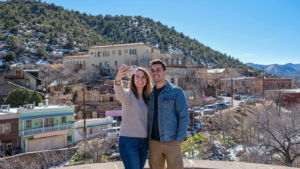
Clinging impossibly to Cleopatra Hill’s slope, Jerome once produced over $1 billion in copper, gold, and silver. The town peaked at 15,000 residents in the 1920s, crashed to 50 by 1953, then reinvented itself as an arts community.
Today’s Jerome blends ghost town authenticity with modern conveniences—art galleries occupy former bordellos, restaurants serve craft cocktails in historic saloons, and boutique hotels welcome overnight guests.
Must-see attractions:
- Douglas Mansion State Historic Park offers panoramic Verde Valley views and mining exhibits
- Audrey Headframe Park preserves massive mining equipment against dramatic backdrops
- Historic downtown features buildings literally sliding downhill from decades of underground blasting
- Jerome Grand Hotel (formerly United Verde Hospital) allegedly ranks among America’s most haunted hotels
Photography opportunities: Jerome’s vertical layout creates stunning compositions. Shoot during golden hour when afternoon light illuminates weathered buildings against dark mountain shadows. The sliding jail (which moved 225 feet downhill) makes an iconic subject.
Insider tip: Park at the lower end of town and walk uphill. Parking is scarce at the summit, and the steep streets challenge vehicles with poor brakes.
2. Tombstone – "The Town Too Tough to Die"
Location: 70 miles southeast of Tucson via I-10 and AZ-80
Elevation: 4,539 feet
Road Access: Paved highway, all vehicles
Admission: Free to walk streets; individual attractions charge $5-15
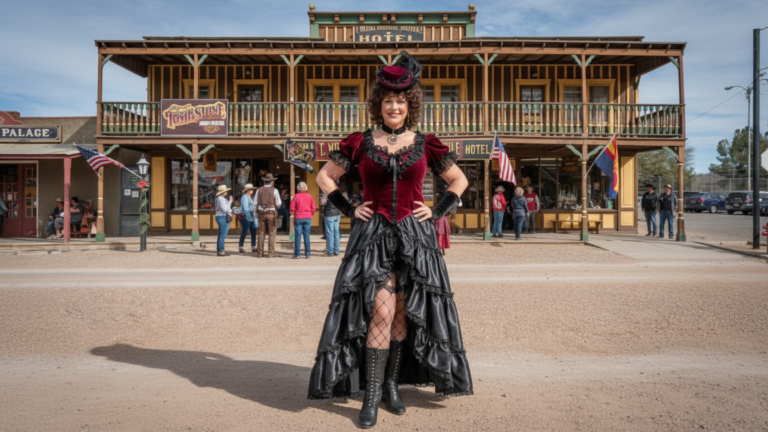
No Arizona ghost town carries more legendary status than Tombstone. The 1881 Gunfight at the O.K. Corral cemented this silver mining camp in American folklore, and the town has enthusiastically embraced its Wild West reputation.
Modern Tombstone operates as a living history museum with staged gunfights, period-costumed merchants, and meticulously preserved 1880s architecture. While heavily commercialized, the authentic history beneath the tourist veneer remains genuinely fascinating.
Must-see attractions:
- O.K. Corral features daily reenactments and original site markers
- Boothill Cemetery contains the graves of outlaws and lawmen including Lester Moore and those killed at the O.K. Corral
- Tombstone Courthouse State Historic Park houses excellent exhibits on frontier justice and mining operations
- Big Nose Kate’s Saloon has operated continuously since 1881 (now serving pizza and local beer)
- Bird Cage Theatre preserves original furnishings, including 140 bullet holes in walls and ceiling
Photography opportunities: Allen Street provides classic Old West storefronts. Visit Boothill Cemetery at sunrise for dramatic lighting on wooden markers and desert mountain backdrops.
Insider tip: Visit on weekday mornings to avoid tour buses. Many buildings offer self-guided tours, letting you explore at your own pace without group crowds.

3. Bisbee – Arizona's Most Livable Ghost Town
Location: 95 miles southeast of Tucson via I-10 and AZ-80
Elevation: 5,300 feet
Road Access: Paved highway, all vehicles
Admission: Free to explore town; mine tours $13-50
Bisbee produced over $6 billion in mineral wealth before mining ceased in 1975. Unlike most Arizona ghost towns, Bisbee never died—its population dropped but stabilized, and the town evolved into an arts and retirement community that treasures its Victorian-era architecture.
Today’s Bisbee offers the perfect ghost town experience for visitors who appreciate history but also enjoy good restaurants, comfortable hotels, and brewery taprooms.
Must-see attractions:
- Lavender Pit open-pit mine creates an otherworldly 300-acre excavation visible from town overlooks
- Queen Mine Tour takes visitors 1,500 feet underground in authentic mining railway cars
- Historic District preserves hundreds of Victorian-era homes built into steep hillsides
- Copper Queen Hotel has hosted celebrities since 1902 (and reportedly multiple ghosts)
- Brewery Gulch once contained 47 saloons serving miners; today hosts galleries, bars, and restaurants
Photography opportunities: Bisbee’s layered hillside architecture creates incredible compositions from multiple viewpoints. The Lavender Pit’s colorful striations photograph beautifully from the overlook at midday when sun illuminates the terraced walls.
Insider tip: The town spans steep terrain. Wear comfortable walking shoes and expect significant elevation changes. Park in the central business district and explore on foot.
4. Oatman – Where Wild Burros Rule the Streets
Location: 30 miles southwest of Kingman via AZ-68 and historic Route 66
Elevation: 2,710 feet
Road Access: Paved highway, all vehicles
Admission: Free
Oatman represents Route 66 nostalgia meets Wild West authenticity. This gold mining town peaked at 10,000 residents in 1915, declined dramatically after mines closed in 1942, then found new life as a tourist destination along America’s Mother Road.
Wild burros (descendants of miners’ pack animals) roam freely through downtown, creating unique photo opportunities and delighting visitors. The town has fully committed to its Old West character with staged gunfights and false-front buildings.
Must-see attractions:
- Wild burros wander streets daily—bring carrots to feed them (sold in local shops)
- Oatman Hotel where Clark Gable and Carole Lombard honeymooned in 1939
- Daily gunfights on Main Street (check schedule, usually weekends)
- Historic Route 66 follows hairpin turns through dramatic Black Mountains scenery
Photography opportunities: The burros create whimsical subjects against weathered storefronts. Visit early morning for softer light and fewer tourists. The Route 66 approach through Sitgreaves Pass offers spectacular desert mountain vistas.
Insider tip: The road from Topock climbs through narrow switchbacks. RVs and trailers should avoid this route. Instead, approach from Kingman via AZ-68.
5. Goldfield Ghost Town
Location: 4 miles northeast of Apache Junction via AZ-88
Elevation: 2,000 feet
Road Access: Paved highway, all vehicles
Admission: Free to walk grounds; individual attractions charge $8-30
Goldfield offers the most accessible ghost town experience for Phoenix-area visitors and families with young children. While technically a reconstruction (the original town burned in 1898), Goldfield preserves authentic buildings relocated from nearby sites and provides genuine mining history.
The location capitalizes on proximity to Superstition Mountains and Lost Dutchman legends, creating a theme park atmosphere that some purists dismiss. However, the mine tours, narrow-gauge train rides, and interpretive exhibits deliver solid educational value.
Must-see attractions:
- Mammoth Gold Mine tours descend into an authentic mine shaft
- Superstition Narrow Gauge Railroad offers scenic desert rides
- Mining Museum displays equipment and explains extraction processes
- Reptile exhibit showcases native Arizona species
- Melodrama theater performs classic Western entertainment
Photography opportunities: The reconstructed storefronts photograph well against Superstition Mountain backdrops. Visit during winter months when the legendary “gold light” illuminates the peaks at sunset.
Insider tip: Goldfield works well as part of an Apache Trail day trip. Continue east on AZ-88 to Canyon Lake for scenic rewards beyond the ghost town.
Intermediate Adventures: Off-the-Beaten-Path Ghost Towns
6. Ruby – Arizona's Best-Preserved Ghost Town
Location: 50 miles southwest of Tucson near the Mexican border
Elevation: 4,200 feet
Road Access: 11 miles of maintained dirt road; high-clearance recommended
Admission: $12 per person (guided tours only, advance reservation required)
Ruby stands as Arizona’s most photogenic and well-preserved true ghost town. Unlike tourist-oriented sites, Ruby remains genuinely abandoned—no gift shops, no staged entertainment, just authentic buildings slowly surrendering to desert elements.
The town produced $14 million in lead, zinc, copper, and silver between 1877-1940. Today, approximately 25 structures remain standing, including the jail, school, mine superintendent’s house, and several residences with period furnishings still inside.
Must-see features:
- Mine shaft headframes and equipment create dramatic silhouettes
- Schoolhouse retains original desks, chalkboards, and educational materials
- Jail cells show where lawbreakers waited for circuit court judges
- Montana Mine produced the richest ore deposits
- 360-degree mountain views with zero modern development visible
Photography opportunities: Ruby delivers gold for photographers. The buildings’ weathered wood textures, rusted mining equipment, and mountain backdrops create endless compositions. Golden hour transforms ordinary scenes into magazine-worthy images.
Insider tip: Reserve tours well in advance—Ruby limits daily visitors to protect the fragile site. The road becomes impassable during monsoon season. Pack plenty of water; no services exist for 25+ miles.
7. Chloride – Arizona's Oldest Continuously Inhabited Mining Camp
Location: 20 miles northwest of Kingman via US-93
Elevation: 4,000 feet
Road Access: Paved highway to town; dirt roads to outlying sites
Admission: Free
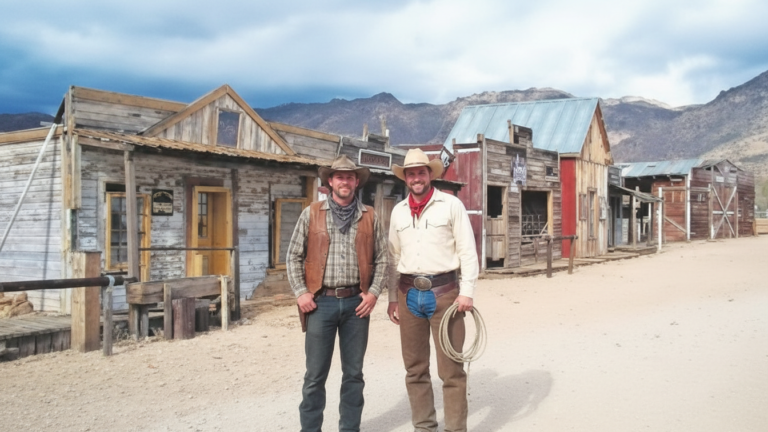
Chloride claims status as Arizona’s oldest continuously inhabited mining town, though “inhabited” means approximately 250 residents spread across a large area. The town’s remote location and minimal tourism infrastructure preserve authentic ghost town character.
Silver strikes in 1863 brought prospectors flooding into the Cerbat Mountains. The town peaked around 5,000 residents in the 1920s but never quite died, maintaining a small population that values independence and solitude.
Must-see features:
- Roy Purcell Murals cover an entire hillside with massive psychedelic artwork from the 1960s
- Yesterdays Restaurant serves meals in an authentically preserved building
- Historic downtown contains original structures housing antique shops and small businesses
- Surrounding desert holds numerous abandoned mine sites (exercise extreme caution)
- Tennessee Shut-Ins (scenic canyon area, requires 4WD and local knowledge)
Photography opportunities: The Purcell murals create surreal subjects against natural rock formations. Downtown’s weathered buildings photograph beautifully, especially during afternoon light that emphasizes texture and shadows.
Insider tip: Chloride offers virtually no services. Fuel up in Kingman. Cell coverage is spotty. The residents value privacy—always ask permission before photographing private property.
8. Vulture City – "A Ghost Town Just for You"
Location: 12 miles southwest of Wickenburg via Vulture Mine Road
Elevation: 2,200 feet
Road Access: 6 miles of maintained dirt road; passenger cars acceptable
Admission: $12 adults, $10 seniors/students
Vulture Mine produced more gold than any other Arizona mine—approximately $200 million worth. German immigrant Henry Wickenburg discovered the outcropping in 1863, and the settlement that grew around it eventually held 5,000 residents.
Today, Vulture City operates as a well-managed historic site with guided tours and self-guided exploration options. The preservation group has stabilized buildings without over-restoring them, maintaining authentic ghost town atmosphere.
Must-see features:
- Hanging tree where 18 men were executed for high-grading (stealing ore)
- Assay office contains original equipment and dust-covered ledgers
- Mine headframe towers over the site
- Power plant shows early electrical generation technology
- Ball mill and ore processing equipment demonstrate extraction methods
Photography opportunities: The headframe and surrounding structures create classic ghost town compositions. Interior shots of the assay office capture atmospheric dust-filtered light through broken windows.
Insider tip: Visit during cooler months—summer temperatures regularly exceed 110°F with minimal shade. The site allows overnight RV camping for an extra fee, offering unique sunset and sunrise photography opportunities.
9. Swansea – Remote Desert Solitude
Location: 35 miles southwest of Parker via paved and dirt roads
Elevation: 800 feet
Road Access: Final 10 miles require high-clearance vehicle
Admission: Free (BLM land)
Swansea represents pure ghost town isolation. This copper mining settlement operated 1909-1924, then was completely abandoned to the desert. No tourism infrastructure exists—visitors must be entirely self-sufficient.
The town site preserves a remarkable collection of structures including the two-story railroad depot, smelter ruins, and approximately 20 building remains. The Bureau of Land Management protects the site but provides no amenities.
Must-see features:
- Railroad depot (Swansea’s most photogenic structure)
- Smelter ruins show industrial-scale ore processing
- Narrow-gauge railway grade visible across landscape
- Clara Consolidated Mine site overlooks the townsite
- Complete isolation—you’ll likely have the entire ghost town to yourself
Photography opportunities: Swansea’s preservation and isolation create authentic ghost town photography. The depot building’s weathered wood and shattered windows tell compelling stories. Wide-angle shots capture the harsh desert setting.
Insider tip: This is serious backcountry. Bring two spare tires, extensive water supplies, and GPS navigation. Cell service does not exist. Visit October-March only—summer heat is life-threatening. Always travel with a partner vehicle.
10. Two Guns – Route 66's Forgotten Attraction
Location: 30 miles east of Flagstaff via I-40 (exit 230)
Elevation: 5,500 feet
Road Access: Paved road, all vehicles
Admission: Free (ruins visible from roadside)
Two Guns tells a darker story than most ghost towns. Originally a trading post capitalizing on Route 66 traffic, the site gained notoriety for exploiting a nearby cave system (site of an 1878 Apache-Navajo conflict) as a roadside attraction.
The business peaked in the 1950s but declined after I-40 bypassed the location. Today, crumbling stone buildings and rusted gas station equipment decay alongside the original Route 66 alignment.
Must-see features:
- Stone ruins of trading post and tourist facilities
- Abandoned gas station with vintage pump islands
- Original Route 66 pavement still visible
- Canyon Diablo Bridge (historic truss bridge nearby)
- Meteor Crater visible in the distance (paid attraction, 20 miles away)
Photography opportunities: The stone ruins create dramatic subjects, especially when framed against wide Arizona skies. Graffiti has unfortunately degraded some buildings, but careful composition can exclude it.
Insider tip: The site sits on private property with “No Trespassing” signs, though enforcement is inconsistent. Respect boundaries and photograph from public areas. The caves are extremely dangerous and should never be entered.
Advanced Exploration: Remote and Challenging Sites
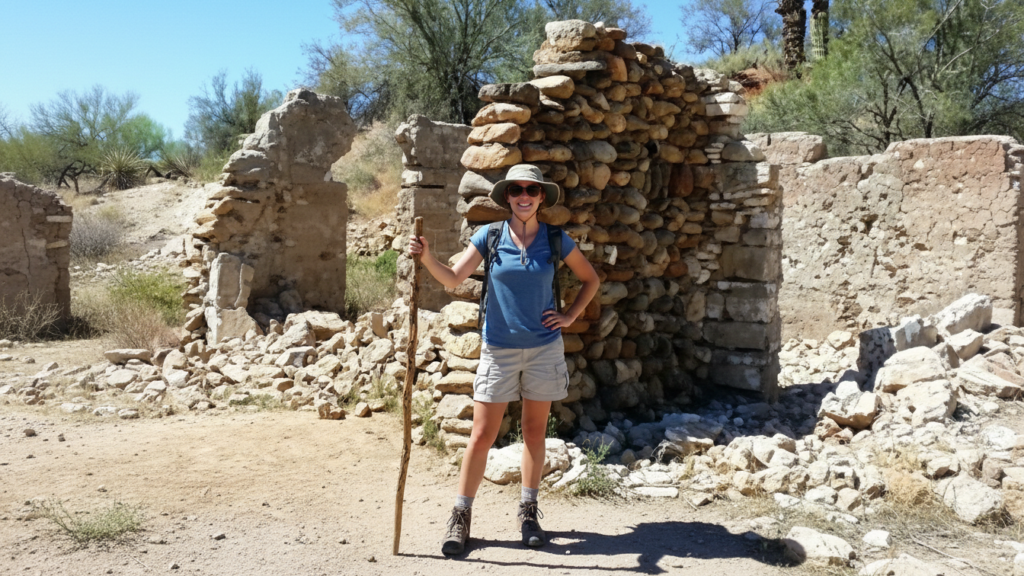
These ghost towns require serious preparation, navigation skills, and appropriate vehicles. Several involve significant hiking or technical 4WD routes. Only experienced backcountry travelers should attempt these sites.
11. Gillette – High Desert Isolation
Location: 40 miles north of Wickenburg via unmarked forest roads
Elevation: 5,200 feet
Road Access: Requires high-clearance 4WD and expert navigation
Admission: Free (Prescott National Forest)
Gillette produced silver and gold from 1876-1942, peaking around 1,000 residents. The town never had road access—everything arrived by pack mules on steep mountain trails. Today, only foundations, mine shafts, and scattered artifacts remain.
Reaching Gillette requires following unmarked jeep trails through Prescott National Forest. GPS coordinates are essential, as trail junctions lack signage and topo maps show outdated routes.
What to expect:
- Minimal remains: mostly stone foundations and mine tailings
- Excellent solitude: you may be the only visitor that week
- Dangerous mine shafts: stay alert, shafts often lack warning markers
- Historical detective work: interpreting the site requires research and imagination
- Technical driving: rocky sections, steep grades, and narrow passages
Insider tip: Join Arizona ghost town exploring clubs that organize group trips to remote sites. Experienced guides provide historical context and ensure safe navigation. Never attempt Gillette solo or without offline maps.
12. Stanton – Backcountry Adventure
Location: 60 miles northwest of Phoenix via paved and dirt roads
Elevation: 2,000 feet
Road Access: High-clearance vehicle required; 4WD recommended
Admission: Free (private land with traditional public access)
Stanton’s gold deposits attracted miners starting in 1863. The town gained infamy for violent conflicts—claim jumping and shootouts occurred regularly. The cemetery’s boot hill section contains numerous graves marked simply “Killed at Stanton.”
Today, Stanton is privately owned but traditionally accessible to respectful visitors. Approximately 10 structures remain in various states of collapse, along with extensive mining equipment and tailings.
What to expect:
- Authentic abandonment: no restoration or interpretation
- Mining equipment: arrastra, stamps, and ore carts scattered about
- Structural hazards: buildings are unstable, enter at your own risk
- Seasonal access: monsoon flooding often makes roads impassable
- Private property: owner may close access without notice
Insider tip: The road from Congress requires careful navigation through washes. Rain can make it impassable for days. Always check weather forecasts. Pack recovery equipment if attempting in anything less than ideal conditions.
13. Octave – Million Dollar Mystery
Location: 50 miles north of Wickenburg via US-93 and forest roads
Elevation: 3,600 feet
Road Access: High-clearance vehicle required
Admission: Free (state trust land—permit technically required)
Octave gold mine produced over $1 million between 1900-1942 from ore that assayed at astonishing values. Unlike many Arizona mines, Octave maintained profitability for decades, yet the town was suddenly abandoned in 1942 for reasons that remain unclear.
The site preserves remarkable features including the mill foundation, manager’s house, and various outbuildings. Octave’s remoteness has protected it from significant vandalism.
What to expect:
- Moderate remains: stone foundations and partial structures
- Mining infrastructure: mill site shows ore processing scale
- Historical mystery: the town’s sudden abandonment puzzles historians
- Difficult access: rough roads deter casual visitors
- Legal ambiguity: technically state trust land, traditional access tolerated
Insider tip: The road deteriorates significantly in the final miles. Scout on foot before attempting in larger vehicles. Spring wildflowers around Octave create beautiful photography opportunities for those willing to make the journey.
14. Total Wreck – Aptly Named
Location: 30 miles southeast of Tucson in the Empire Mountains
Elevation: 5,000 feet
Road Access: Requires high-clearance 4WD
Admission: Free (Coronado National Forest)
Total Wreck earned its pessimistic name when a prospector’s partner declared their claim “a total wreck.” Ironically, the mine produced substantial silver and lead deposits from 1879-1890, supporting a community of 200 people.
Reaching Total Wreck requires navigating rough forest roads prone to washouts. Only scattered foundations and mine tailings remain—the buildings were dismantled long ago. The site appeals primarily to hardcore ghost town enthusiasts and historians.
What to expect:
- Archaeological remnants: foundations and artifact scatters
- Mine shafts: several dangerous vertical shafts, often inadequately marked
- Technical hiking: reaching the actual mine requires steep climbing
- Historical interpretation required: minimal visible remains
- Outstanding views: Empire Mountains panoramas reward the effort
Insider tip: Total Wreck works well as part of a loop combining Gardner Canyon and Kentucky Camp (another ghost town with preserved buildings). This creates a full day of remote exploration for properly equipped adventurers.
15. Harshaw – Hidden in the Patagonia Mountains
Location: 60 miles southeast of Tucson via Patagonia
Elevation: 5,400 feet
Road Access: Maintained dirt road, high-clearance recommended
Admission: Free (private land with traditional access)
Harshaw silver mines produced over $5 million between 1877-1903. The town supported 2,000 residents at its peak, complete with brewery, newspaper, and red-light district. Today, scattered ruins hide among oak trees in a beautiful mountain canyon.
The setting distinguishes Harshaw from typical Arizona ghost towns. Instead of harsh desert, the site nestles in lush woodland with running water (seasonal) creating an almost incongruous backdrop for Western mining history.
What to expect:
- Beautiful setting: grassland and oak woodland
- Scattered ruins: several stone foundations and partial structures
- Cemetery: headstones from the 1880s-90s
- Wildlife: excellent birding area with unusual species
- Solitude: remote location discourages crowds
Insider tip: Combine Harshaw with nearby Mowry and Washington Camp ghost towns for a comprehensive Patagonia Mountains ghost town tour. The region offers excellent camping at nearby national forest sites.
Photography Tips for Ghost Town Visits
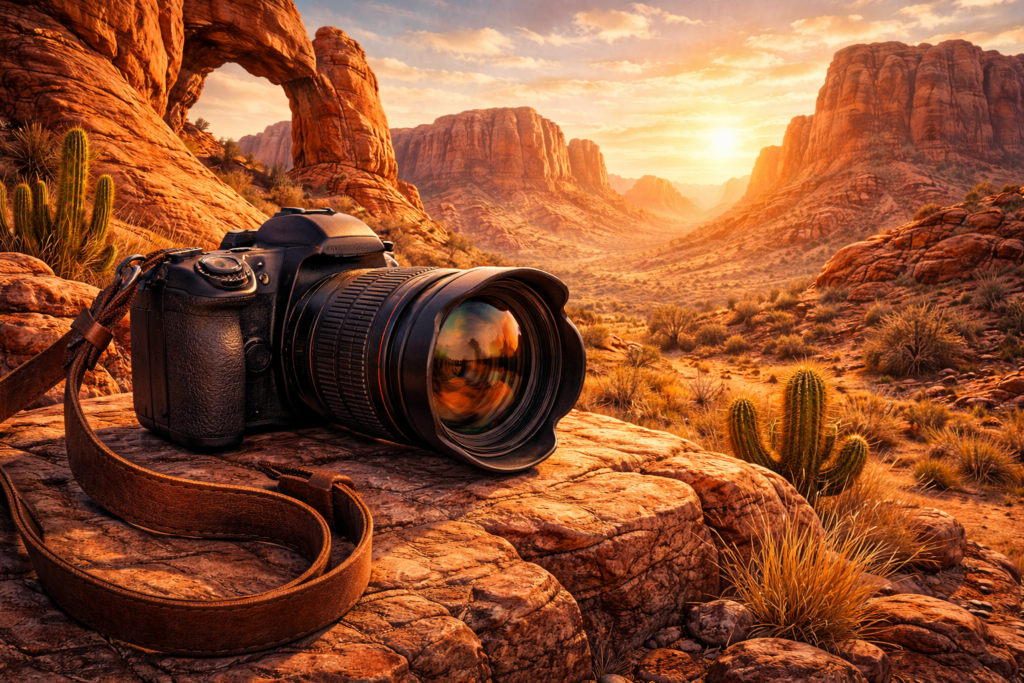
Ghost towns offer exceptional photography opportunities, but capturing compelling images requires planning beyond simply pointing a camera at old buildings.
Timing is everything. Golden hour (first hour after sunrise, last hour before sunset) transforms ordinary subjects into exceptional images. Side-lighting emphasizes texture in weathered wood, rusted metal, and crumbling stone. Midday harsh light flattens subjects and bleaches out desert detail.
Compose with intention. Include environmental context showing how structures relate to landscape. Wide-angle shots establish setting; telephoto compression isolates compelling details. Frame subjects using doorways, windows, or structural elements to add depth.
Capture details that tell stories. Old bottles, rusted tools, faded signs, and personal items left behind create powerful narratives. Get close to show texture, weathering, and the passage of time.
Respect the rule of thirds. Position key elements off-center at intersection points for more dynamic compositions. Place horizons on the upper or lower third rather than dead center.
Shoot interiors carefully. Exposure challenges arise with bright exterior light streaming through windows. Bracket exposures or use HDR techniques to balance interior detail with window views.
Include people for scale. Human figures help viewers understand building size and add life to compositions. Position subjects thoughtfully—avoid center frame placement and “tourist poses.”
Experiment with black and white. Ghost town subjects often translate beautifully to monochrome, emphasizing form, texture, and tonal range without color distractions.
Essential gear:
- Wide-angle lens (16-35mm) for architecture and environmental shots
- Telephoto zoom (70-200mm) for isolating details and compression effects
- Tripod for low-light interiors and HDR brackets
- Polarizing filter to deepen skies and reduce reflections
- Lens cloth for dust (Arizona ghost towns are extremely dusty)
Legal considerations: Most historic buildings are protected. Never move, remove, or disturb artifacts for photographs. If a building looks unstable, shoot from the doorway rather than entering.
Safety Considerations and Legal Issues
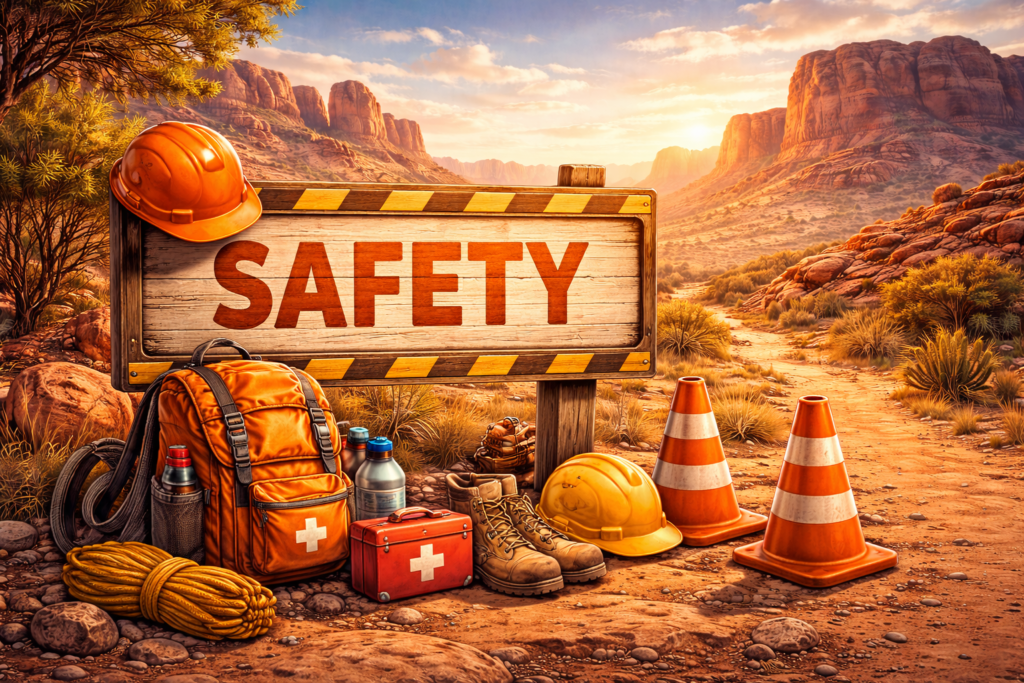
Ghost town exploration involves real risks that shouldn’t be dismissed. Every year, visitors suffer injuries or require rescue from preventable situations.
Structural Hazards
Old buildings collapse. Weathered wood breaks without warning. Floors disappear beneath carpets. Roofs cave in. Never assume a structure is safe simply because it’s still standing.
Before entering any building:
- Assess structural integrity from outside
- Look for sagging rooflines, leaning walls, or foundation failures
- Test floors before committing weight
- Never go alone—have a spotter outside
- Exit immediately if you hear creaking or see movement
Many ghost town buildings contain asbestos insulation, lead paint, and other hazardous materials. Disturbing these materials creates health risks.
Mine Hazards
Abandoned mines kill people every year. Vertical shafts hide under vegetation or wooden covers. Horizontal tunnels collapse. Bad air (carbon dioxide, methane) accumulates in confined spaces. Hidden water pits wait in darkness.
Absolutely never:
- Enter any mine shaft or tunnel
- Approach uncovered vertical shafts
- Allow children near mine features
- Move barriers or warning signs
If you encounter an unmarked mine hazard, report it to the local BLM or Forest Service office.
Environmental Dangers
Heat: Summer desert temperatures kill. Carry one gallon of water per person per day minimum. Recognize heat exhaustion symptoms—confusion, nausea, rapid pulse. Many remote ghost towns lack shade.
Wildlife: Rattlesnakes inhabit old buildings and debris piles. Watch where you place hands and feet. Scorpions hide in cool, dark spaces. Africanized bees sometimes colonize structures.
Flash floods: Desert washes fill rapidly during monsoons. Never camp in washes. If visiting during storm season, monitor weather constantly and maintain escape routes.
Navigation Risks
Remote ghost towns often lack GPS coverage. Cell service doesn’t exist. Unmarked roads confuse even experienced navigators. Pack:
- Detailed topographic maps (paper backup)
- GPS device with offline maps
- Compass and navigation skills
- Emergency communication (satellite messenger)
Legal Considerations
Federal land (BLM, Forest Service): Generally accessible to public, but removing artifacts is illegal under the Archaeological Resources Protection Act. Fines reach $20,000.
State trust land: Technically requires permits, though enforcement varies. Some ghost towns sit on trust land with traditional public access.
Private property: Many ghost towns remain privately owned. “No Trespassing” signs must be respected. Owners increasingly restrict access due to liability concerns and vandalism.
What’s legal:
- Photography from public areas
- Walking through accessible areas
- Non-invasive exploration
What’s illegal:
- Removing ANY artifacts, even “souvenirs”
- Disturbing structures or features
- Digging for artifacts
- Defacing property with graffiti
- Metal detecting without permits
Vehicle Considerations
Before attempting dirt road access:
- Check current road conditions with managing agency
- Ensure you have appropriate vehicle capability
- Carry recovery equipment (tow strap, shovel, traction aids)
- Pack two spare tires for remote locations
- Fill fuel tank—add 50% to GPS distance estimates
Road classifications:
- Maintained dirt: Graded periodically, passenger cars often acceptable
- Unmaintained: High-clearance required, 4WD recommended
- 4WD required: Expect rocks, steep grades, technical sections
- Hiking only: No vehicle access
Ghost Town Etiquette and Preservation
These historic sites survive only through visitor respect. Poor behavior accelerates deterioration and often triggers access restrictions.
Take only photographs, leave only footprints. This cliché remains the golden rule. Every removed bottle, tool, or nail hastens a site’s disappearance. Future visitors deserve the same experience you enjoyed.
Don’t add to structures. Resist urges to “improve” compositions by moving artifacts, creating displays, or rearranging items. Document what you find, don’t curate it.
Graffiti destroys history. Tagging ruins damages irreplaceable resources. Report vandalism to authorities—many jurisdictions now prosecute historical vandalism aggressively.
Stay on established paths. Desert cryptobiotic soil takes decades to recover from a single footprint. Avoid creating new trails or cutting across untouched areas.
Respect private property absolutely. If signs indicate “No Trespassing,” respect them even if access was previously allowed. Landowners face liability for visitor injuries and increasingly restrict access after problems.
Pack out all trash. Bring garbage bags and remove not just your waste but any trash you encounter. Ghost towns aren’t dumps.
Leave gates as you found them. Open gates stay open; closed gates get closed. Ranchers depend on proper gate management.
Share information carefully. When posting about remote sites, consider whether publicity will damage them. Extremely fragile locations sometimes benefit from relative obscurity.
Support preservation efforts. Organizations like Arizona Ghost Town Trails Association work to protect sites. Consider membership or donations to groups preserving mining history.
Planning Your Arizona Ghost Town Road Trip
The Northern Route (5-7 Days)
Day 1-2: Verde Valley Circuit
- Jerome (explore hillside town, overnight in historic hotel)
- Clarkdale (former company town with preserved downtown)
- Perkinsville (remote site, 4WD required)
Day 3: Route 66 Corridor
- Oatman (morning visit to avoid heat)
- Goldroad (abandoned company town nearby)
- Chloride (afternoon exploration)
- Overnight: Kingman
Day 4-5: Prescott Area
- Poland Junction (moderate ruins)
- Gillette (if you have 4WD and experience)
- Octave (challenging access)
- Stanton (if conditions allow)
- Overnight: Prescott or Wickenburg
Day 6: Phoenix Area
- Vulture City (morning tour)
- Goldfield (afternoon, good for families)
- Canyon Lake scenic drive
- Return to Phoenix
The Southern Route (4-6 Days)
Day 1: Tucson to Tombstone
- Stop at Colossal Cave for tour
- Tombstone (afternoon and evening)
- Overnight: Tombstone or Bisbee
Day 2: Bisbee
- Queen Mine tour (morning)
- Historic district exploration
- Lavender Pit overlook
- Brewery Gulch evening
- Overnight: Bisbee
Day 3: Patagonia Mountains
- Harshaw
- Washington Camp
- Mowry
- Overnight: Patagonia or return to Tucson
Day 4: Ruby Circuit
- Ruby (reservation required, morning tour recommended)
- California Gulch (if accessible)
- Arivaca for lunch
- Return to Tucson
Day 5: Eastern Route
- Cochise (foundations and cemetery)
- Pearce (partial ghost town)
- Courtland (difficult access)
- Gleeson (restored jail and scattered ruins)
The Remote Adventure Route (7-10 Days, 4WD Required)
This itinerary visits Arizona’s most isolated ghost towns. Requires serious preparation, navigation skills, and appropriate vehicle.
Preparation requirements:
- High-clearance 4WD vehicle in excellent condition
- Two spare tires
- Complete recovery kit
- Satellite communication device
- 10+ gallons extra water
- Offline maps and GPS
- First aid supplies
- Emergency overnight gear
Itinerary:
- Swansea (2 days including transit)
- Vulture City (base camp for area exploration)
- Stanton and Octave loop
- Gillette (if conditions permit)
- Harshaw/Patagonia circuit
- Ruby (easier after remote sites)
- Total Wreck area
- Courtland region
Essential Resources
Books:
- “Ghost Towns of Arizona” by James and Barbara Sherman
- “Arizona’s Historic Mines” by Philip Varney
- “Ghost Towns and Mining Camps of Arizona” by Clifton Barber
Websites:
- ghosttowns.com (comprehensive database)
- Arizona State Parks (Jerome, Tombstone resources)
- Tonto National Forest (Goldfield area information)
Apps:
- Gaia GPS (offline topographic maps)
- OnX Offroad (land ownership and trail info)
- Weather Underground (detailed forecasts)
Packing Checklist
Essential safety gear:
- First aid kit with snake bite supplies
- Emergency water (1 gallon per person per day, plus reserve)
- Navigation tools (GPS, maps, compass)
- Communication device (satellite messenger)
- Flashlight/headlamp with extra batteries
- Multi-tool
- Fire starter
- Emergency shelter
Photography gear:
- Camera with multiple lenses
- Extra batteries and memory cards
- Tripod
- Lens cleaning supplies
- Polarizing filter
- Protective camera bag
Clothing considerations:
- Sturdy closed-toe boots
- Long pants (protect against plants and creatures)
- Layered clothing (desert temperature swings)
- Wide-brimmed hat
- Sunglasses
- Sunscreen
Vehicle supplies (dirt road trips):
- Full-size spare tire(s)
- Jack and lug wrench
- Air compressor
- Tow strap
- Shovel
- Traction aids (boards or mats)
- Extra fuel
- Coolant and oil
Frequently Asked Questions FAQs
Q: Can I spend the night in a ghost town?
It depends on the location. Jerome, Bisbee, and Tombstone offer commercial accommodations in historic buildings. Some remote sites like Vulture City allow RV camping by arrangement. True ghost towns on public land may permit dispersed camping nearby (not in structures), but verify regulations. Never enter or sleep in unstable buildings.
Q: Are ghost towns dangerous for children?
A: Developed sites like Jerome, Tombstone, and Goldfield work well for families with appropriate supervision. Remote locations with unstable structures, open mine shafts, and challenging access are inappropriate for young children. Assess each site individually based on your children’s ages and abilities.
Q: What's the best ghost town for photography?
A: Ruby offers the most photogenic combination of well-preserved structures, dramatic setting, and authentic abandonment. Jerome provides stunning hillside compositions. Vulture City delivers classic mining equipment subjects. Each site offers unique opportunities depending on your photographic interests.
Q: Do I need a 4WD vehicle?
A: Many excellent ghost towns (Jerome, Tombstone, Bisbee, Oatman, Goldfield) require only standard passenger cars. Sites like Ruby, Vulture City, and Chloride need high-clearance vehicles but not necessarily 4WD. Remote locations like Swansea, Gillette, and Stanton absolutely require 4WD capability.
Q: Can I metal detect at ghost towns?
A: Many ghost towns claim paranormal activity. The Jerome Grand Hotel, Vulture Mine hanging tree, and various Tombstone locations report supernatural experiences. Whether you believe in ghosts or not, these sites certainly possess eerie atmospheres, especially at dawn or dusk.
Q: Are Arizona ghost towns haunted?
A: Generally no. Federal land (BLM, Forest Service) prohibits metal detecting at historic sites without special permits. State trust land also requires permits. Private property needs owner permission. Violations risk substantial fines under artifact protection laws.
Q: What should I do if I find artifacts?
A: Photograph them where you find them, then leave them undisturbed. Federal law protects all artifacts on public land. Removing items is illegal and damages historical resources. If you discover something significant, report locations to the appropriate land management agency.
Q: Can I bring my dog?
A: Policies vary by location. Developed towns generally allow leashed dogs. Remote sites on public land typically permit pets, but Arizona heat creates serious risks for animals. Many buildings contain hazards dangerous to curious dogs. Consider leaving pets home for ghost town explorations.
Q: How much time should I allocate per ghost town?
A: Developed sites like Jerome and Bisbee merit half-day to full-day visits. Moderate ghost towns like Ruby, Vulture City, and Chloride need 2-3 hours. Remote archaeological sites take whatever time you’re willing to invest—some visitors spend 30 minutes, others explore for hours.
Q: What's the scariest ghost town?
A: Two Guns earns creepiest reputation for dark history and deteriorated structures. Ruby’s isolation and authentic abandonment unsettle some visitors. Jerome Grand Hotel offers “haunted” accommodations if you seek supernatural scares. Personal reactions vary—what one person finds eerie, another finds fascinating.
Q: Can I camp near ghost towns?
A: Many ghost towns sit on or near public land with dispersed camping opportunities. Coronado National Forest, Tonto National Forest, and BLM lands generally permit camping. Always verify current regulations, practice Leave No Trace principles, and camp away from fragile historic features.
Preserving Arizona's Ghost Town Heritage
Arizona’s ghost towns represent irreplaceable windows into the American West’s mining frontier. Each abandoned building, rusted tool, and weathered sign tells stories of hope, hardship, triumph, and tragedy that shaped the state’s development.
These sites survive in increasingly fragile condition. Time, weather, vandalism, and simple neglect gradually erase them from the landscape. Every removed artifact, every defaced wall, every collapsed structure represents history lost forever.
As visitors, we bear responsibility for ensuring future generations can experience these remarkable places. That responsibility includes:
Educating ourselves about proper ghost town etiquette and artifact protection laws before visiting. Ignorance doesn’t excuse destructive behavior.
Modeling appropriate behavior for others, especially when visiting popular sites where your actions influence those around you.
Supporting preservation efforts through organizations working to stabilize and protect historic sites. Financial contributions, volunteer work, and advocacy all matter.
Sharing responsibly when posting about ghost town visits. Consider whether revealing exact locations of extremely fragile sites serves preservation interests.
Respecting closures when sites suffer damage or face threats. Access restrictions often result from prior visitor misbehavior—don’t compound problems by ignoring warnings.
The ghost towns profiled in this guide range from tourist-friendly attractions to serious backcountry challenges. Whether you explore extensively or visit just one or two accessible sites, approach these historic places with respect, curiosity, and commitment to leaving them unharmed for future visitors.
Arizona’s ghost towns offer adventures that engage history enthusiasts, challenge photographers, and reward those willing to venture beyond highways into desert backroads. The state’s mining heritage produced an unmatched collection of abandoned settlements—distinctive, photogenic, and historically significant.
Visit them while you can. These remarkable places won’t last forever, but through our collective efforts, they can survive long enough for your grandchildren to experience the same sense of wonder you feel standing in a weathered doorway, imagining the bustling mining camp that once thrived there.
The desert slowly reclaims what humans abandoned. That process is inevitable and even appropriate—ghost towns eventually become part of the landscape again. But we can slow that process through preservation, documentation, and respectful visitation that honors rather than exploits these fragments of Arizona’s fascinating past.
Now get out there and explore. The ghost towns are waiting.
About the Author:
The GetawayArizona team has been exploring Arizona’s natural hot springs for over a decade, documenting dozens of thermal pools from well-known destinations to secret backcountry finds. As Phoenix-based outdoor enthusiasts, we specialize in providing accurate, safety-focused information that helps adventurers experience Arizona’s geothermal wonders responsibly. Our combined experience includes hundreds of hot springs visits throughout the Southwest and extensive backcountry travel in Arizona’s wildest corners. Follow our hot springs adventures on Pinterest or explore more on our GetawayArizona Blog.
Related Arizona Adventure Guides:
- 7 Secret Slot Canyons Near Page Arizona (That Aren’t Antelope Canyon)
- 15 Affordable Weekend Getaways from Phoenix Under $200 Directions)
Last Updated: November 2025
This post may contain affiliate links for recommended gear and accommodations. We earn a small commission at no extra cost to you, helping us create more free Arizona outdoor content. All recommendations are based on our genuine experiences
Find Your Perfect Arizona Getaway
Ready to explore more of Arizona? Browse destination guides, unique stays, hidden gems, and outdoor adventures to build your ideal weekend escape.
Start Planning Your Next Adventure Weekend Getaway in Arizona
Related Weekend Getaway Guides:
This post may contain affiliate links for accommodations and tours. We earn a small commission at no extra cost to you, helping us create more free Arizona travel content. All budget calculations and recommendations are based on our genuine experiences.
Check Us out On Pinterest
Table of Contents
Toggle