The Southwest holds thousands of abandoned mining communities waiting for adventurous visitors to discover their secrets. These historic sites offer a tangible connection to the Old West, where you can walk through authentic buildings and imagine life during the mining boom era.
Philip Varney’s authoritative book “Arizona Ghost Towns and Mining Camps” defines these settlements with two key characteristics. First, the population has decreased markedly from its peak. Second, the initial reason for settlement—whether a mine, railroad, or other industry—no longer keeps people in the community.
Your exploration options range from well-preserved sites with tourist amenities to remote, authentic ruins scattered across the desert landscape. Each location tells a unique story of pioneer life, economic booms, and eventual decline.
History enthusiasts, photographers, and families seeking unique adventures will find valuable educational experiences at these destinations. The combination of accessibility and authentic preservation makes these historic sites perfect for weekend trips and memorable explorations.
Introduction to Arizona’s Ghost Towns
The deserts and mountains of Arizona hold secrets of communities that once thrived with activity but now stand as monuments to a different age. These historic ghost towns Arizona preserves offer visitors a tangible connection to the American West’s most dynamic period. Walking through these settlements provides insight into the hopes, struggles, and ultimate fate of thousands who sought their fortunes in the harsh desert landscape.
Author Tony Hillerman captured the essence of these places perfectly when he stated that “ghost towns offer a sort of touching-place with the past.” This sentiment rings especially true in Arizona, where more than 300 such sites dot the landscape. Each location tells a unique story of ambition, hardship, and transformation.
What is a Ghost Town?
A ghost town is formally defined as a place where the population has decreased markedly and the initial reason for settlement no longer keeps people in the community. These locations aren’t necessarily completely empty or abandoned. Instead, they represent communities that have lost their original purpose and most of their residents.
Understanding abandoned mining towns in Arizona requires recognizing the distinction between true ghost towns and places that maintain some infrastructure. Towns like Jerome and Bisbee, while often called ghost towns, actually support populations and tourism businesses. True ghost towns typically feature crumbling structures, empty streets, and minimal to no permanent residents.
Several factors contributed to the abandonment of these settlements. Mining depletion stood as the most common cause, as ore deposits ran dry and companies shut down operations. Railroad rerouting left some communities isolated and economically unviable. Water source exhaustion proved fatal in Arizona’s arid climate, where survival depended on reliable water access. Economic shifts and market crashes also forced residents to seek opportunities elsewhere.
Brief History of Arizona’s Towns
Arizona’s mining districts were established as early as 1864 when prospectors fanned out to find the next bonanza after initial gold discoveries. These Arizona gold rush towns sprang up almost overnight as fortune seekers flooded into the territory. The promise of wealth drew thousands westward, creating bustling communities in previously uninhabited areas.
The late 1800s and early 1900s saw successive waves of mining for different minerals. After gold came silver strikes that created new boom towns. Copper mining eventually dominated Arizona’s economy, supporting larger and longer-lasting communities. Each mineral discovery triggered a cycle of rapid growth followed by decline.
Railroad construction between the 1880s and 1900s transformed Arizona’s mining industry. The railroads enabled large-scale mining operations and town development by providing transportation for ore, supplies, and people. Communities located along rail lines prospered while those bypassed often withered.
The Great Depression dealt a devastating blow to many Arizona gold rush towns as metal prices collapsed. World War II marked the final chapter for numerous communities, as resources shifted to the war effort. The harsh desert environment, particularly water scarcity, continued to challenge settlement survival throughout this entire period. Towns that couldn’t secure adequate water supplies faced inevitable abandonment, regardless of mineral wealth.
The Allure of Ghost Towns
Ghost towns across Arizona hold a magnetic appeal that draws thousands of visitors each year. These abandoned settlements offer something modern cities cannot replicate—an authentic window into America’s pioneering past. Author Tony Hillerman described arizona ghost towns as “touching-places with the past,” where history becomes tangible rather than theoretical.
The remnants of these once-thriving communities tell stories of ambition, hardship, and survival. Walking through weathered structures and dusty streets creates connections that textbooks and museums struggle to achieve. These sites preserve moments frozen in time when the American West was still being shaped by determination and discovery.
Outdoor Museums of Western Heritage
Historic ghost towns Arizona preserves function as open-air museums showcasing authentic frontier life. Unlike curated exhibits behind glass, these locations allow visitors to experience genuine mining-era architecture and infrastructure. The buildings, tools, and layouts reveal how settlers adapted to harsh desert conditions and remote locations.
These old west ghost towns provide invaluable educational opportunities for understanding American westward expansion. The mining camps attracted diverse populations from Europe, Mexico, and Asia, creating multicultural communities in unexpected places. This immigration pattern shaped the Southwest’s development and cultural identity.
Towns like Swansea demonstrated surprising sophistication despite their remote locations. Beyond typical saloons and restaurants, these settlements featured car dealerships, theaters, and electric light companies. Such amenities reveal that frontier towns embraced modern conveniences as quickly as transportation networks allowed.
The architectural styles and construction techniques visible in these settlements document the evolution of building practices. Adobe structures, wooden storefronts, and stone foundations each tell stories about available materials and community priorities. Photographers, artists, and filmmakers continue finding inspiration in these weathered landscapes.
Ghost towns contribute significantly to the mythology of the American West through literature and cinema. They represent both the possibilities of frontier opportunity and the harsh realities of resource-dependent economics. This duality makes them compelling subjects for creative interpretation and historical analysis.
Forces Behind Abandonment
The economic decline that created arizona ghost towns followed predictable patterns across mining regions. Mineral deposit exhaustion represented the primary cause of abandonment in most communities. When ore veins faulted or disappeared entirely, towns lost their economic foundation overnight.
Dropping ore quality often preceded complete abandonment in historic ghost towns Arizona witnessed. As high-grade deposits depleted, extraction costs exceeded profit margins. Mining companies faced impossible choices between investing in deeper shafts or relocating operations entirely.
Commodity price fluctuations triggered boom-bust cycles that devastated mining communities. A silver price crash could transform a prosperous town into a struggling settlement within months. Goldfield experienced this when geological faults disrupted its primary vein, ending the boom as suddenly as it began.
Transportation challenges compounded economic pressures in remote locations. Moving ore to smelters required expensive infrastructure that smaller operations couldn’t sustain. Water shortages in desert environments made both mining operations and community survival increasingly difficult.
Natural disasters accelerated decline in already struggling settlements. Fires swept through wooden structures with devastating speed, while flash floods damaged mining equipment and infrastructure. Rebuilding required capital investment that marginal operations simply couldn’t justify.
The Great Depression forced closure of operations like Congress that might have survived under different circumstances. Federal regulations during World War II restricted gold mining to prioritize strategic metals. These external factors sometimes mattered more than local geology in determining a town’s fate.
Some old west ghost towns experienced multiple revivals as technology improved or wartime demand spiked. New extraction methods occasionally made previously unprofitable deposits viable again. However, these revivals typically created temporary employment rather than sustainable communities, leading to repeated cycles of hope and abandonment.
Top 5 Must-See Ghost Towns in Arizona
From copper mining camps to gold rush boomtowns, Arizona’s most accessible ghost towns offer unique glimpses into the past. These five destinations combine authentic historical preservation with modern amenities that welcome visitors. Each location tells a different story about the mining boom that shaped the American Southwest.
These arizona ghost towns range from partially restored attractions to living communities that maintain their frontier character. Visitors can walk through original buildings, explore mine tunnels, and experience Old West culture firsthand. The towns listed below represent the best options for anyone planning a ghost town adventure.
Jerome
Perched dramatically on Cleopatra Hill at 5,000 feet elevation, the Jerome ghost town clings to a mountainside with stunning views of the Verde Valley. This former copper mining camp once housed 15,000 residents during its 1920s heyday. Today, fewer than 500 people call this historic community home.
The town has reinvented itself as a thriving artist colony. Art galleries, studios, and boutiques now occupy former saloons and boarding houses. Historic buildings lean at precarious angles due to decades of underground mining that destabilized the hillside.
Visitors can explore the Jerome State Historic Park, housed in the former mansion of mining magnate James Douglas. The town’s winding streets reveal colorful shops, restaurants, and wine-tasting rooms. Ghost tours operate year-round for those seeking paranormal encounters in one of America’s most haunted towns.
Tombstone
Tombstone Arizona stands as the most famous ghost town in the American West. Founded in 1879 after prospector Ed Schieffelin discovered silver, the town gained immortality through the legendary Gunfight at the O.K. Corral. This 30-second shootout in 1881 became the defining moment of frontier justice.
Unlike fully abandoned ghost towns, Tombstone operates as a living history destination. Daily reenactments bring the Wild West to life on Allen Street. Actors dressed in period clothing stage gunfights, trials, and historical demonstrations throughout the day.
The town preserves numerous original structures including the Bird Cage Theatre, Boothill Graveyard, and the O.K. Corral. Museums, saloons, and shops maintain the 1880s atmosphere while accommodating modern tourists. Trolley tours and stagecoach rides offer authentic transportation through this National Historic Landmark.
Bisbee
Nestled in the Mule Mountains near the Mexican border, Bisbee represents Arizona’s most colorful mining legacy. The Copper Queen Mine produced over 8 billion pounds of copper between 1880 and 1975. Victorian architecture and steep hillside neighborhoods create a unique character unlike any other ghost town.
After the mines closed, artists and free spirits discovered Bisbee’s affordable real estate and natural beauty. The town transformed into a creative haven. Art galleries, antique shops, and craft breweries now occupy former mining company buildings.
Visitors can tour the underground Copper Queen Mine wearing hard hats and mining gear. The Queen Mine Tour takes guests 1,500 feet into the mountain aboard authentic mining cars. Above ground, colorful painted houses cascade down canyon walls creating a Mediterranean village atmosphere in the Arizona desert.
Goldfield
Located on the historic Apache Trail near the Superstition Mountains, the Goldfield ghost town offers family-friendly entertainment in an authentic Old West setting. The original town boomed in the 1890s with three saloons, a boarding house, general store, blacksmith shop, brewery, meat market, and schoolhouse. At its peak, the settlement appeared ready to surpass nearby Mesa in size and importance.
When the gold vein faulted and ore quality dropped, Goldfield died a slow death. The town experienced brief revival attempts between 1910 and 1926 before abandoning permanently. After more than 115 years, the reconstructed town welcomes visitors from around the world as a premier tourist destination.
Today’s Goldfield features the Mammoth Gold Mine tour, narrow gauge train rides, and daily gunfight shows performed by the Goldfield Gunfighters. Visitors can try their luck at gold panning in authentic sluices. The museum displays mining equipment, photographs, and artifacts from the town’s glory days.
The town’s location on the Apache Trail makes it an ideal stop during scenic drives through Tonto National Forest. Reptile exhibits, a working blacksmith shop, and historic buildings create an immersive experience. Unlike some abandoned sites, Goldfield provides modern restrooms, gift shops, and dining options for comfortable exploration.
Visiting Jerome

Nestled high above the Verde Valley, the Jerome ghost town provides an unforgettable journey through Arizona’s colorful mining past. Once known as the “Wickedest Town in the West,” this hillside community now welcomes visitors with a perfect combination of history, art, and stunning views. As one of the most popular historic ghost towns Arizona preserves, Jerome offers easy access and plenty of attractions for explorers of all ages.
The town clings to the side of Cleopatra Hill at an elevation of 5,200 feet. Its steep streets wind between Victorian-era buildings that house galleries, museums, and restaurants. Unlike many abandoned settlements, Jerome maintains a vibrant community of artists and history enthusiasts who keep the town’s heritage alive.
Getting There: Driving Directions
Reaching the Jerome ghost town requires navigating scenic mountain roads that reward drivers with spectacular views. From Phoenix, the journey takes approximately two hours via Interstate 17 North to State Route 260, then connecting to Alternate Route 89. The final stretch climbs dramatically up the mountainside with steep grades and sharp curves.
Travelers from Sedona enjoy a shorter trip of about 30 to 45 minutes along Highway 89A. This route offers some of the most beautiful scenery in Arizona, passing through red rock country before ascending to Jerome.
Visitors coming from Prescott, Flagstaff, or Tucson should plan for longer drive times. The roads approaching Jerome feature steep inclines and hairpin turns that require careful attention. Drivers should use lower gears when descending and check their brakes before starting the mountain passage.
Parking in Jerome’s compact downtown can be challenging, especially during weekends and tourist seasons. Arriving early in the day provides better chances of finding convenient spots near main attractions. Street parking fills quickly, so patience and flexibility help make the visit more enjoyable.
What to See and Do
Jerome State Historic Park and the Douglas Mansion museum serve as excellent starting points for understanding the area’s mining legacy. The mansion sits on a hill overlooking the town and houses extensive exhibits about copper mining operations. The Mine Museum displays original equipment and photographs that bring the boom town era to life.
One of arizona ghost towns’ most unusual features is Jerome’s sliding jail, which moved 225 feet from its original location due to unstable ground. This quirky attraction highlights the challenges of building on a mountainside honeycombed with mine shafts.
Art lovers find plenty to explore among Jerome’s numerous galleries and studios. The Jerome Artists Cooperative showcases local talent, while monthly art walks allow visitors to meet creators in their workspaces. Antique shops scattered throughout the town offer treasures from the mining era and beyond.
Walking tours reveal architectural gems and provide panoramic views of the Verde Valley stretching for miles below. The steep streets require comfortable shoes and reasonable fitness levels. Historic mine headframes dot the landscape, reminding visitors of the industry that built this remarkable community.
Jerome’s reputation as one of America’s most haunted places adds another dimension to visits. Ghost tours operate regularly, sharing tales of the town’s colorful and sometimes tragic past. The Jerome Historical Society offers additional insights into local legends and verified history.
Restaurants housed in historic buildings serve everything from casual fare to upscale dining. Many establishments feature outdoor seating where guests can enjoy fresh mountain air and stunning views while sampling local cuisine.
Exploring Tombstone
The streets of Tombstone Arizona echo with tales of lawmen, outlaws, and the rough-and-tumble frontier life that defined the 1880s. This legendary town stands as one of the most authentic old west ghost towns you can visit today. Visitors can walk the same dusty roads where history’s most famous gunfight took place and experience the spirit of the American frontier.
Tombstone offers more than just historical sites. It brings the Wild West to life through preserved buildings, daily reenactments, and interactive museums that transport you back over 140 years.
Historical Highlights
Prospector Ed Schieffelin founded Tombstone in 1877 after discovering rich silver deposits in Apache territory. Soldiers had warned him he would only find his tombstone in the dangerous region. He proved them wrong and named his strike accordingly.
The town exploded during the silver mining boom of the early 1880s. Tombstone’s population surged to 14,000 residents, making it one of the largest cities between St. Louis and San Francisco. Dozens of saloons, gambling halls, and theaters lined Allen Street as fortune seekers poured in from across the country.
The most famous event in Tombstone’s history occurred on October 26, 1881. The Gunfight at the O.K. Corral lasted only 30 seconds but became legendary. Wyatt Earp, his brothers Virgil and Morgan, along with Doc Holliday, faced off against the Clanton-McLaury gang in a deadly confrontation over law and order.
The town attracted colorful characters beyond the Earp brothers. Bat Masterson walked these streets alongside Big Nose Kate and the notorious outlaw Johnny Ringo. Tombstone gained a reputation for lawlessness that attracted both adventurers and troublemakers alike.
When mine flooding threatened to shut down operations in the 1880s, many predicted Tombstone would die. The town survived through determination and eventually embraced its Wild West heritage. This resilience earned it the motto “The Town Too Tough to Die.”
Unique Attractions
The historic district of Tombstone preserves the authentic feel of an 1880s frontier town. Daily gunfight reenactments at the O.K. Corral bring history to life with period-accurate costumes and dramatic performances. Visitors can stand in the exact spot where the famous shootout occurred.
Boot Hill Cemetery sits on a hillside overlooking town and contains the graves of those who “died with their boots on.” The colorful epitaphs tell stories of hangings, gunfights, and frontier justice. Some markers display dark humor that reflects the harsh realities of life in one of the most famous historic ghost towns Arizona has to offer.
The Bird Cage Theatre operated as one of the wildest entertainment venues in the Old West. Gambling never stopped for eight years straight from 1881 to 1889. Today, visitors can tour the building and see original bullet holes in the walls from drunken shootouts.
The Tombstone Courthouse State Historic Park showcases territorial history through exhibits and artifacts. The Crystal Palace Saloon still serves drinks in its restored Victorian interior. Big Nose Kate’s Saloon offers live music and maintains the atmosphere of a genuine frontier watering hole.
The Tombstone Epitaph newspaper office continues publishing after more than 140 years. Visitors can see the original printing equipment and learn about frontier journalism. Staged shootouts happen regularly on Allen Street, where actors portray famous outlaws and lawmen.
Historic walking tours guide visitors through lesser-known stories of everyday life in Tombstone. Multiple museums display mining equipment, photographs, and personal belongings of famous residents. Each attraction adds depth to understanding life during the silver boom era.
Nearby Fairbank served as Tombstone’s railroad supply depot after the tracks arrived in 1882. This satellite community played a vital role in keeping Tombstone supplied during its mining heyday. In February 1900, Fairbank became the site of a failed train robbery attempt involving lawman Jeff Milton, who defended the express car despite being wounded.
Discovering Bisbee
The colorful buildings of Bisbee cascade down Tombstone Canyon, creating a visual feast unlike any other former copper mining town. This hillside community has evolved from one of the most productive mining operations in the Southwest into a thriving arts destination. Unlike many historic ghost towns Arizona visitors encounter, Bisbee maintains a vibrant year-round population that brings authentic energy to its historic streets.
Bisbee’s steep terrain and well-preserved Victorian architecture create a European village atmosphere rare in the American Southwest. The town climbs dramatically up the sides of the Mule Mountains, with houses and businesses connected by narrow roads and historic staircases. This unique layout has protected Bisbee from modern development that has transformed other Arizona communities.
The former copper mining operations ceased in the 1970s, but this closure sparked an unexpected renaissance. Artists, musicians, and creative spirits discovered affordable real estate and inspiring surroundings. Today, Bisbee stands as one of the most successfully reinvented arizona ghost towns, where history and contemporary culture blend seamlessly.
Art Scene and Local Culture
Bisbee’s transformation into an arts community began attracting creative individuals in the 1970s when copper prices fell. The town’s bohemian atmosphere now rivals established art colonies in Santa Fe and Sedona. Dozens of galleries line the main streets, showcasing works from local and regional artists working in diverse media.
Visitors can explore galleries featuring everything from traditional Southwestern paintings to contemporary sculpture and mixed media installations. Jewelry makers create pieces incorporating copper and turquoise, paying homage to the region’s mining heritage. Metalwork artists transform industrial remnants into striking art pieces that celebrate Bisbee’s past.
The shopping experience extends beyond fine art galleries. Vintage shops and antique stores fill historic buildings along Main Street and Brewery Gulch. These businesses offer treasures ranging from mining memorabilia to mid-century furniture and retro clothing. Quirky boutiques sell handmade crafts, local products, and unique items you won’t find anywhere else.
Bisbee’s dining scene reflects its creative culture. Farm-to-table restaurants serve innovative cuisine using locally sourced ingredients. Cozy coffee shops provide gathering spaces for locals and visitors to mingle. The town supports several microbreweries and wine bars that contribute to its vibrant social atmosphere.
The community culture sets Bisbee apart from much of rural Arizona. This progressive, accepting town welcomes diversity and celebrates individuality. The population includes retirees, working artists, young families, and free spirits who appreciate the town’s authentic character and creative energy.
Popular Events
Bisbee hosts numerous annual festivals that draw visitors from across the Southwest. The Bisbee 1000 Great Stair Climb challenges participants each October to race up historic staircases totaling 1,000 vertical feet. This grueling event winds through residential neighborhoods, offering stunning views and a true test of endurance.
Music lovers flock to the Bisbee Blues Festival, which brings talented performers to this intimate mountain setting. The festival showcases both established blues artists and emerging talent. Unlike many abandoned mining towns in Arizona that only offer historical attractions, Bisbee provides rich cultural programming year-round.
Brewery Gulch Daze transforms the historic district each September with street fairs, live music performances, and entertaining contests. This celebration honors Bisbee’s colorful past while showcasing its contemporary creativity. Vendors line the streets selling arts, crafts, and local food products.
The annual Bisbee Home Tour opens doors to some of the town’s most fascinating historic residences. Visitors can admire Victorian architecture and period details while learning about restoration efforts. This event highlights the community’s commitment to preserving its architectural heritage.
Monthly art walks bring galleries and shops together for extended evening hours. These events create opportunities to meet artists, enjoy wine and refreshments, and experience Bisbee’s creative community firsthand. Vintage car shows, holiday celebrations, and special exhibitions add to the event calendar throughout the year.
Three major attractions provide deeper insights into Bisbee’s history. The Bisbee Mining & Historical Museum, a Smithsonian affiliate, offers comprehensive exhibits about copper mining operations and community development. Interactive displays and authentic artifacts bring the town’s industrial past to life.
The Queen Mine tour takes visitors underground into actual mining tunnels. Wearing hard hats and riding mine cars, guests experience conditions miners faced daily. Knowledgeable guides, many of them former miners, share personal stories that make history tangible and memorable.
The Lavender Pit provides a striking visual reminder of Bisbee’s mining legacy. This massive open-pit copper mine remains visible from various viewpoints around town. The terraced walls and enormous scale demonstrate the industrial operations that once dominated this mountain community.
Adventures in Goldfield
Just a short drive from Phoenix, Goldfield Ghost Town transforms history into an interactive experience for all ages. This reconstructed mining town sits along the historic Apache Trail, offering visitors a chance to step back into the 1890s when gold fever gripped Arizona. The town’s colorful past includes multiple boom-and-bust cycles, from its initial prosperity with three saloons and a schoolhouse to its eventual decline when ore quality dropped and mining operations ceased in 1926.
Today, Goldfield stands as one of the most accessible arizona ghost towns for families seeking authentic Western adventure. The location near Apache Junction makes it an ideal day trip destination. Visitors can immerse themselves in Old West culture through hands-on activities, guided tours, and live entertainment that brings the mining era to life.
Attractions That Bring History to Life
Main Street welcomes guests with carefully reconstructed buildings that mirror the original town’s layout. Each structure houses unique shops, exhibits, and museums that showcase life during Arizona’s mining boom. The authentic atmosphere captures the spirit of old west ghost towns while providing modern amenities for comfortable exploration.
The Mammoth Gold Mine tour stands out as a highlight for many visitors. This guided experience takes guests deep into an actual working mine where prospectors once extracted precious metals from the earth. Tour guides explain mining techniques, safety challenges, and the dangerous conditions miners faced daily in the underground tunnels.
The Goldfield Museum preserves artifacts from the town’s peak years. Historical photographs line the walls alongside mining equipment that tells the story of Arizona’s gold rush era. Displays feature minerals, tools, and personal items from the boarding house, general store, blacksmith shop, and brewery that once served the community.
Gold panning offers hands-on excitement for visitors of all ages. This traditional prospecting activity lets guests try their luck at finding real gold flakes in authentic mining sluices. Participants keep whatever gold they discover, creating memorable souvenirs from their ghost town adventure.
Arizona’s only narrow gauge railroad provides scenic rides through the desert landscape. The train winds past the majestic Superstition Mountains, offering photography opportunities and panoramic views. This attraction appeals especially to families with young children who enjoy the nostalgic rail experience.
The Goldfield Gunfighters perform choreographed shootouts multiple times throughout the day. These entertaining shows feature period costumes, witty dialogue, and Old West action that captures the lawless spirit of frontier towns. The performances blend historical accuracy with family-friendly humor.
Additional attractions include a Reptile Exhibit showcasing desert wildlife, antique mining equipment displays, specialty gift shops, and the Mammoth Steakhouse restaurant. Each element contributes to the comprehensive old west ghost towns experience that sets Goldfield apart from other Arizona destinations.
Getting to This Desert Destination
Reaching Goldfield ghost town requires approximately 45 minutes of driving from downtown Phoenix. Visitors should take Highway 60 East toward Apache Junction, then follow signs to the Apache Trail, also known as State Route 88. The scenic route offers stunning desert vistas along the way.
Travelers from Mesa, Scottsdale, and other Valley cities can access the ghost town via similar routes. Clear directional signage makes navigation straightforward for first-time visitors. The drive itself becomes part of the adventure, passing through characteristic Arizona terrain.
Ample parking accommodates cars, RVs, and tour buses in designated lots near the main entrance. Admission fees vary based on age and group size, with discounts available for children and seniors. The ghost town typically operates daily, though hours may vary seasonally.
Planning visits between October and April ensures the most comfortable experience. Summer temperatures in the Arizona desert can exceed 110 degrees Fahrenheit, making outdoor exploration challenging. Cooler months provide ideal conditions for walking tours, mine visits, and outdoor activities that define the Goldfield experience.
Oatman: A Wild West Experience
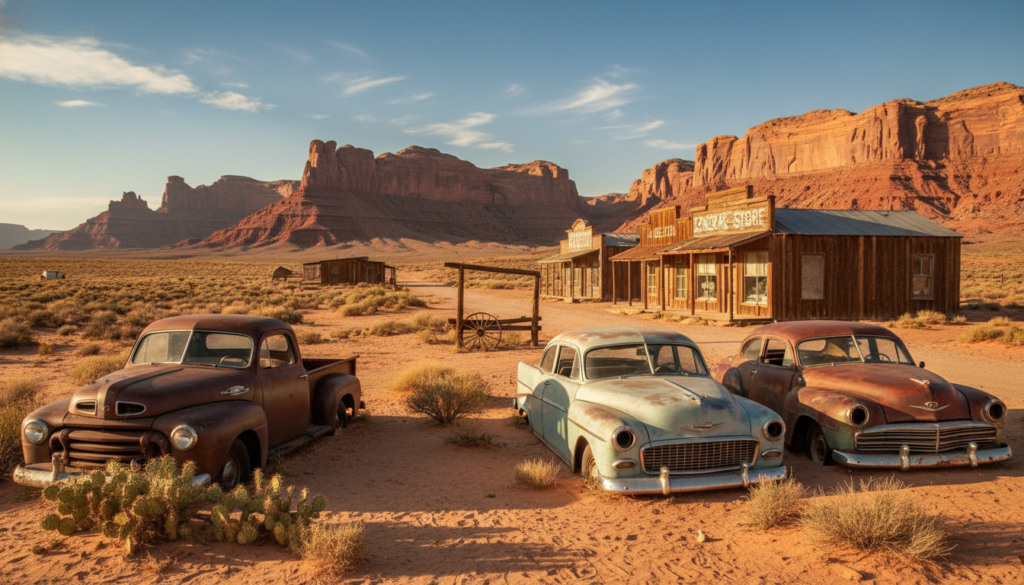
Few arizona ghost towns capture the essence of the Old West quite like Oatman, a former gold mining hub turned Route 66 attraction. This quirky desert community sits along one of the most scenic stretches of historic Route 66 in Arizona. Visitors find themselves stepping back in time to an era of miners, gunfighters, and frontier adventure.
The town’s authentic atmosphere makes it stand out among other old west ghost towns in the region. Wooden sidewalks line the main street, where historic buildings now house gift shops, saloons, and restaurants. Daily entertainment includes mock gunfight shows that bring Western history to life for tourists.
Historic Highway Connections
Oatman thrived during the early 1900s as a gold mining center along the original Route 66 alignment between Kingman and Topock. The town produced millions of dollars in gold before operations declined. When Route 66 became America’s Main Street, Oatman transformed into a popular service stop for travelers heading west.
The construction of Interstate 40 in the 1950s bypassed the town, reducing traffic significantly. However, this decline helped preserve Oatman’s authentic character. Today, the town has experienced a resurgence as enthusiasts seek out genuine Route 66 ghost towns with historical significance.
Similar revival stories exist throughout the region. Hackberry, located 28 miles northeast of Kingman, originated in 1874 as a silver mining destination. When mining claims played out, the area became a ghost town. The construction of Route 66 brought new life with several service stations opening along the highway.
Interstate 40 reduced Hackberry to almost nothing once again. The reopening of the Hackberry General Store in 1992 as a Route 66 information center sparked another revival. The town’s population slowly rebounded, and it still retains that distinctive ghost town charm today.
The famous Oatman Hotel stands as a centerpiece of Main Street history. Clark Gable and Carole Lombard honeymooned here in 1939 after getting married in Kingman. The hotel now operates as a museum and restaurant, with memorabilia covering the walls. Visitors can dine in the same rooms where Hollywood legends once stayed.
Meeting the Four-Legged Locals
Oatman’s most beloved residents are the wild burros that roam freely through town. These gentle animals descended from pack burros that miners released when operations closed decades ago. The burros have become a major attraction, creating memorable experiences for visitors.
The friendly burros approach tourists looking for treats throughout the day. Special burro food is sold in shops along Main Street. These interactions provide excellent photo opportunities as the animals pose with visitors against the backdrop of historic buildings.
Safety guidelines help ensure positive interactions with these protected animals. Visitors should feed burros with flat palms to avoid accidental nips. Never approach burros from behind or attempt to ride them. The animals have protected status under federal law, making harassment illegal.
The town celebrates its unique wildlife with quirky annual events. The Burro Biscuit Toss competition challenges participants to throw dried burro droppings for distance. Other festivities include bed races, sidewalk egg frying contests, and gold panning demonstrations. These events reinforce Oatman’s reputation as one of Arizona’s most entertaining desert destinations.
Lesser-Known Ghost Towns
While thousands flock to Jerome and Tombstone each year, Arizona harbors dozens of abandoned mining towns in Arizona that remain largely undiscovered. These hidden settlements offer a more authentic glimpse into frontier life without the tourist crowds and commercialization. Adventurous travelers who venture off the beaten path will find well-preserved structures, fascinating histories, and opportunities for genuine exploration.
The state’s desert landscapes conceal countless mining communities that once thrived during Arizona’s boom years. Many of these sites feature original buildings, mining equipment, and artifacts that transport visitors back to the late 1800s. Unlike their famous counterparts, these lesser-known locations provide intimate experiences where you can truly imagine life in the Old West.
Vulture City
Located about 12 miles west of Wickenburg, Vulture City stands as one of the most well-preserved arizona ghost towns in the state. Henry Wickenburg discovered the Vulture Mine here in 1863, and it quickly became one of Arizona’s most productive gold operations. The mine extracted millions of dollars worth of gold over its operational lifetime, supporting a thriving community of miners and their families.
Today, visitors can explore numerous original structures that paint a vivid picture of mining camp life. The assay office still contains period equipment used to test ore samples. The blacksmith shop displays tools and implements that kept the mining operation running smoothly.
The schoolhouse offers a glimpse into frontier education, while residential buildings show how families lived in this remote desert location. Mine headframes tower over the landscape, marking the entrance to underground workings. Perhaps most infamous is the “hanging tree,” where claim jumpers reportedly met their fate during the lawless early days.
Vulture City operates as a privately-owned historic site offering guided tours on weekends. These tours provide access to buildings filled with original furnishings, mining equipment, and personal belongings left behind when the town was abandoned. Knowledgeable guides share stories about the miners, merchants, and families who once called this place home.
Kentucky Camp
Situated 40 miles south of Tucson in the scenic Santa Rita Mountains, Kentucky Camp represents a different chapter in Arizona’s mining history. This historic ghost towns Arizona site served as a headquarters for the Santa Rita Water and Mining Company in the early 1900s. Unlike many abandoned settlements, Kentucky Camp offers unique overnight opportunities for visitors seeking immersive experiences.
The U.S. Forest Service manages this site through their “Rooms with a View” program, making two historic cabins available for rental. Guests can spend the night in authentically restored buildings while surrounded by mining-era structures. This camping option provides an unparalleled opportunity to experience ghost town life after dark, when the desert comes alive with nocturnal sounds.
Beyond the rentable cabins, the site features several other preserved structures that showcase early 20th-century mining operations. The main headquarters building displays period architecture typical of southwestern mining communities. Visitors can explore at their own pace, discovering remnants of equipment, foundations, and artifacts scattered throughout the area.
The surrounding landscape offers excellent hiking opportunities through rolling hills covered with oak and juniper trees. Wildlife frequently visits the area, including deer, javelina, and numerous bird species. Kentucky Camp combines historical exploration with natural beauty, making it ideal for those who want to experience authentic frontier settlements while enjoying outdoor recreation.
Both Vulture City and Kentucky Camp demonstrate that Arizona’s lesser-known sites often provide richer, more meaningful experiences than their famous counterparts. These locations reward curious travelers with authentic connections to the past and stories that commercial operations rarely preserve.
Safety Tips for Ghost Town Explorations
Before you venture into abandoned mining towns in Arizona, understanding potential hazards can make the difference between a memorable trip and a dangerous situation. These historic sites offer fascinating glimpses into the past, but they also present real risks that require preparation and caution. Following basic safety guidelines ensures you can enjoy exploring arizona ghost towns while protecting yourself and preserving these cultural treasures.
Stay on Established Paths
The most serious danger at abandoned mining towns in Arizona comes from unfenced mine shafts that can drop hundreds of feet into darkness. At places like Courtland, many open shafts exist near the town site, hidden by vegetation or positioned along seemingly safe walking areas. These vertical drops have claimed lives over the years, making extreme caution absolutely essential.
Established trails offer the safest way to explore these historic sites. The BLM manages several locations with marked routes, including Fairbank, where visitors can enjoy self-guided tours and a well-maintained 4-mile loop trail. These designated paths keep you away from the most dangerous areas while still providing excellent access to historic structures.
Never enter mine tunnels or shafts, even if they appear stable. These underground spaces may contain bad air that can cause unconsciousness, unstable rock that could collapse without warning, unexpected vertical drops, and flooding hazards. The risks simply aren’t worth the curiosity.
Historic structures present their own challenges. Buildings with collapsed roofs, unstable walls, or weakened floors can give way suddenly. Hidden hazards inside include rusty nails, broken glass, and rotted floorboards that may look solid but can’t support weight. Many old buildings also contain potentially hazardous materials like asbestos insulation and lead paint.
Smart preparation makes any ghost town visit safer. Travel in groups whenever possible, and always inform someone of your plans and expected return time. Arizona’s desert climate demands carrying adequate water—at least one gallon per person for a half-day trip. Wear sturdy, closed-toe footwear with good ankle support for walking on uneven terrain.
Pack a basic first aid kit, sun protection, and keep your cell phone fully charged. Remember that service may be limited or nonexistent in remote areas, so don’t rely solely on your phone for navigation or emergency help.
Respect the Land
Visiting historic ghost towns Arizona comes with important legal and ethical responsibilities. Federal antiquities laws protect these sites, making it illegal to remove artifacts, deface structures, or disturb archaeological sites. Violations can result in serious fines and criminal charges.
Leave No Trace principles apply fully to ghost town exploration. Every artifact removed, every wall defaced, and every structure damaged diminishes the experience for future visitors. These irreplaceable resources tell stories of Arizona’s past that deserve preservation.
Property rights remain in effect even at seemingly abandoned locations. Some structures are privately owned and may even be inhabited, like certain buildings in Cleator that visitors must view from the road. Trespassing laws apply, and ignoring posted signs or barriers can lead to legal consequences.
Photography offers the perfect way to capture memories without harming these sites. Take as many pictures as you want, but leave everything else exactly as you found it. Even seemingly insignificant items like bottles, cans, or pieces of mining equipment are part of the historical record.
Pack out all trash, including organic waste like fruit peels. Respect posted signs and barriers established by managing agencies like the BLM, Forest Service, and private landowners. These boundaries exist to protect both visitors and the sites themselves.
Touching, climbing on, or removing items from historic structures causes cumulative damage that eventually destroys these precious resources. Every visitor who practices respectful exploration helps ensure that arizona ghost towns remain available for future generations to discover and appreciate.
The Preservation of Ghost Towns
Preservation initiatives safeguard the unique character and historical value of Arizona’s abandoned settlements. Without dedicated conservation work, these remnants of frontier life would crumble into dust within decades. Multiple organizations collaborate to protect these sites for educational and tourism purposes.
The task of maintaining historic ghost towns Arizona involves constant monitoring, structural repairs, and visitor management. Each site presents unique challenges based on climate exposure, building materials, and accessibility. Successful preservation balances public access with long-term protection of irreplaceable structures.
Federal and State Protection Programs
Federal agencies manage many of Arizona’s most significant ghost town sites through various programs. The U.S. Forest Service took ownership of Kentucky Camp in 1989, incorporating its historic adobe buildings into the “Rooms with a View” rental program. This innovative approach generates revenue while ensuring regular maintenance and monitoring.
The Bureau of Land Management oversees several abandoned mining towns in Arizona through protective designations. Swansea, located 30 miles east of Parker, remains under BLM stewardship with dozens of original structures preserved under federal protection. The agency prevents unauthorized removal of artifacts and structural materials.
Fairbank represents one of the most successful preservation projects in the state. As part of the San Pedro Riparian National Conservation Area, the BLM has invested significantly in site stabilization and visitor infrastructure. The agency stabilized the collapsing Fairbank Commercial Co. adobe building using traditional construction techniques.
The site now features interpretive signs explaining the town’s history throughout a 4-mile loop trail. Visitors can explore a fully operational bookstore, museum, and gift shop housed in the restored schoolhouse, open Fridays through Sundays. This comprehensive approach creates an educational experience while protecting fragile structures.
State-level preservation occurs through Arizona State Parks facilities like Jerome State Historic Park and Tombstone Courthouse State Historic Park. These properties receive dedicated funding for maintenance, interpretation, and public programming. County and municipal governments support preservation through historical societies, tourism development grants, and protective zoning regulations.
Community Organizations and Volunteer Networks
Non-profit organizations play a critical role in protecting arizona ghost towns beyond government reach. The Arizona Land Project recently purchased portions of Courtland with specific plans to preserve remaining structures and develop public tour programs. This private-sector approach allows faster action on threatened sites.
Local historical societies maintain numerous smaller ghost towns through volunteer labor and community fundraising. These dedicated groups conduct cemetery maintenance, building restoration, and artifact cataloging. Their work preserves sites that lack federal or state designation but hold significant regional importance.
Gleeson’s restored concrete jail exemplifies volunteer-driven preservation success. The structure now functions as a museum open the first Saturday of each month, staffed entirely by volunteers. This limited schedule protects the site while providing public access and educational opportunities.
Individual preservation efforts also contribute to protecting abandoned mining towns in Arizona. James Finley’s brick residence in Harshaw earned listing on the National Register of Historic Places, ensuring protective oversight. Private property owners who maintain historic structures qualify for tax incentives and technical assistance programs.
Documentation projects conducted by preservation groups create permanent records of threatened sites. Volunteers photograph structures, interview longtime residents, and research historical archives. This information supports advocacy for protective legislation and educates the public about responsible visitation practices.
Educational outreach represents another vital non-profit function in ghost town preservation. Organizations conduct workshops on historical building maintenance, lead guided tours emphasizing conservation ethics, and publish materials about site histories. These efforts build public support for ongoing preservation funding and volunteer recruitment.
Planning Your Road Trip
Exploring old west ghost towns across Arizona becomes easier when you map out strategic routes and timing. The state’s vast geography means some abandoned settlements sit just minutes from major highways, while others require hours of driving on unpaved roads. A well-planned ghost town road trip balances travel time with exploration opportunities at each location.
Your adventure through Arizona ghost towns demands consideration of vehicle capabilities, seasonal weather, and regional clustering of sites. Some routes work perfectly for standard sedans, while remote destinations need high-clearance vehicles. Understanding these factors helps you create an itinerary that matches your interests and comfort level.
Multi-Day Adventure Routes
The Southern Arizona Mining Towns tour concentrates several historic sites within a compact area southeast of Tucson. Start in Tombstone, then head northwest on SR 82 to Fairbank, just 6 miles away. Continue north 14 miles on paved roads to Gleeson, followed by Courtland via the Ghost Town Trail on unpaved roads.
This southern loop includes Bisbee as a comfortable base with hotels and restaurants. You can explore all these locations in 2-3 days without exhausting drives between sites. The close proximity allows more time walking through ruins and less time behind the wheel.
A Central Arizona Mountains route showcases mining towns in cooler elevations. Begin in Jerome perched on Cleopatra Hill, then head to Cleator by taking I-17 north to Exit 259 near Black Canyon City. From there, unpaved backroads lead west to this isolated settlement, suitable for most vehicles in good weather.
Continue to Congress by driving northwest from Wickenburg on US 93 to SR 89, then heading north. Crown King adds another mountain destination to this itinerary. These higher elevation sites offer comfortable temperatures even during summer months.
The Route 66 ghost towns adventure combines historic highway nostalgia with abandoned settlement exploration. Hackberry sits 28 miles northeast of Kingman along the famous Mother Road, featuring vintage memorabilia and crumbling structures. Continue to Oatman for its wild burros and Old West atmosphere.
This route works perfectly for travelers already experiencing Route 66’s iconic stretches. You can complete it in a single long day or spread it across two days with an overnight stay in Kingman.
A Phoenix area day trip to Goldfield Ghost Town takes just 45 minutes via Apache Trail (SR 88) east of Apache Junction. Combine this visit with scenic drives through the Superstition Mountains and stops at Canyon Lake. This compact itinerary fits easily into a single day without requiring overnight accommodations.
The extreme remote exploration route challenges adventurous travelers with distant locations. Swansea lies 30 miles east of Parker near the California border, while Agua Caliente sits 120 miles southwest of Phoenix. These sites require high-clearance vehicles and careful preparation including extra water, fuel, and navigation tools.
Additional accessible locations include Kentucky Camp (40 miles south of Tucson) and Dos Cabezas (east of Willcox on SR 186). Many unpaved roads leading to these ghost towns remain suitable for standard vehicles during dry weather. Always check current road conditions before departing.
Book accommodations in gateway cities like Tucson, Phoenix, Prescott, Kingman, and Bisbee. These urban centers provide comfortable lodging, dining options, and supply opportunities between ghost town visits. Staying in these hubs also gives you flexibility to adjust plans based on weather or road conditions.
Optimal Seasons for Exploration
October through April represents the best times to visit desert-level arizona ghost towns. Summer temperatures frequently exceed 110°F in low-elevation locations, creating dangerous conditions for extended outdoor exploration. Spring and fall provide ideal weather for walking through ruins and photographing crumbling structures.
Higher elevation towns like Jerome and sites in the Prescott area offer year-round exploration opportunities. These mountain locations maintain comfortable temperatures even during summer months when desert settlements become unbearably hot.
Spring months from March through May deliver spectacular wildflower displays alongside moderate temperatures. Desert landscapes transform with colorful blooms, adding visual interest to your photography. Crowds remain manageable during these shoulder season months.
Fall exploration from September through November provides comfortable weather after the summer tourism peak subsides. Fewer visitors mean easier parking and more solitary experiences wandering through abandoned buildings. Temperatures cool gradually, making October especially pleasant.
Arizona’s summer monsoon season from July through August creates flash flood dangers on dirt roads leading to remote sites. Afternoon thunderstorms can rapidly wash out unpaved routes, stranding vehicles or creating hazardous driving conditions. Always check weather forecasts before traveling to isolated locations during monsoon months.
Winter brings snow to higher elevation ghost towns, potentially closing access roads temporarily. Mountain sites may require tire chains or four-wheel drive during winter storms. Desert locations remain accessible and comfortable throughout winter months, with daytime temperatures typically ranging from 60-70°F.
Plan your road trip timing based on which regions you want to explore. Desert routes work best in cooler months, while mountain towns accommodate summer visits. Combining different elevation zones allows year-round ghost town adventures across Arizona’s diverse landscapes.
Gear and Preparation for Ghost Town Excursions
Smart preparation separates memorable ghost town excursions from uncomfortable or dangerous situations. Visiting remote historical sites requires more planning than typical tourist destinations. The right equipment and knowledge about Arizona’s challenging conditions ensure you can focus on exploration rather than survival.
Most abandoned mining towns in Arizona sit far from services, stores, and emergency help. Cell phone coverage rarely exists in these remote areas. Your vehicle becomes your lifeline, and what you pack determines your safety and comfort throughout the day.
Essential Equipment and Supplies
Navigation tools rank among your most critical items. GPS devices provide convenience, but paper maps serve as essential backups when technology fails. Download offline maps before leaving areas with internet access. Many old west ghost towns appear on maps but lack clear signage on approach roads.
Water needs exceed what most visitors expect. Bring at least one gallon per person per day when exploring arizona ghost towns. Desert air pulls moisture from your body faster than you notice. Many sites offer zero water sources or facilities.
Sun protection prevents the most common visitor problems. Pack broad-spectrum sunscreen with SPF 30 or higher. Wide-brimmed hats shield your face and neck from intense rays. Quality sunglasses protect your eyes from glare off rocks and sand. Lightweight long-sleeved shirts provide coverage while allowing air circulation.
Footwear choices directly impact your experience. Sturdy closed-toe hiking boots with good ankle support protect you from uneven ground and rocky terrain. Desert vegetation includes thorny plants that penetrate thin shoe materials. Boots prevent twisted ankles on crumbling foundations and debris.
Your daypack should contain a well-stocked first aid kit with bandages, antiseptic, pain relievers, and any personal medications. Include a flashlight or headlamp with extra batteries for exploring darker structures. A multi-tool or knife handles unexpected situations from opening packaging to minor repairs.
Camera equipment captures your discoveries, while binoculars let you view distant structures and wildlife safely. Pack snacks and lunch since restaurants don’t exist at most locations. Bring trash bags to pack out all waste, leaving sites pristine for future visitors.
Reference materials enhance understanding. Philip Varney’s “Arizona Ghost Towns and Mining Camps” provides detailed historical context. Field guides help identify local plants, animals, and mineral specimens you encounter.
Vehicle preparation proves equally important. Start with a full fuel tank, as gas stations become sparse between abandoned mining towns in Arizona. Check your spare tire, jack, and basic tools before departure. An emergency kit should include jumper cables, tire repair supplies, extra water, blankets, and non-perishable food.
Road conditions vary significantly across locations. Paved routes serve Dos Cabezas, Fairbank, Gleeson, and Congress. Other destinations require unpaved roads suitable for most vehicles during good weather, including routes to Cleator and Courtland. Some remote sites need high-clearance vehicles depending on recent weather and road maintenance.
Adapting to Arizona’s Climate Challenges
Arizona’s dramatic temperature swings demand flexible clothing strategies. Mountain elevations can drop to freezing on winter nights, while desert locations reach 115°F during summer days. Layered clothing lets you adjust as temperatures change throughout your exploration.
Pack a warm jacket for higher elevations and winter months when visiting old west ghost towns. Morning starts often feel cold even when afternoons become hot. Remove or add layers to maintain comfortable body temperature without overheating or getting chilled.
Monsoon season brings sudden weather changes requiring rain gear. Thunderstorms develop rapidly from July through September. Waterproof jackets and pant covers keep you dry during unexpected downpours. Be prepared to cut trips short when weather deteriorates unexpectedly.
Flash flood dangers pose serious threats during monsoons. Never camp or park in dry washes, even when skies look clear. Storms miles away send walls of water down narrow canyons within minutes. Move to higher ground immediately if you hear rushing water or see darkening clouds.
Lightning strikes become hazards on exposed terrain during thunderstorms. Avoid standing near tall structures, lone trees, or metal objects. Seek shelter in your vehicle if lightning approaches, as rubber tires provide insulation from ground strikes.
Extreme heat precautions prevent serious medical emergencies. Avoid midday exploration during summer months when temperatures peak. Schedule visits for early morning or late afternoon instead. Recognize heat exhaustion symptoms including excessive sweating, weakness, and nausea. Heat stroke shows as confusion, lack of sweating, and rapid pulse requiring immediate medical attention.
Never hike alone in extreme conditions at arizona ghost towns. Travel with companions who can assist if problems arise. Inform someone of your planned route and expected return time. Proper preparation transforms ghost town adventures into safe, educational experiences that create lasting memories.
Frequently Asked Questions
What exactly qualifies as a ghost town in Arizona?
According to Philip Varney’s comprehensive definition, a true ghost town has experienced significant population decline and lost its original economic purpose. This doesn’t necessarily mean completely abandoned—places like Jerome and Bisbee maintain populations and tourism infrastructure but are still considered ghost towns because they’ve transformed from their original mining community purpose. Most Arizona ghost towns were abandoned due to mining depletion, railroad rerouting, water source exhaustion, or broader economic shifts.
When is the best time to visit Arizona’s ghost towns?
October through April is strongly recommended for desert ghost towns due to extreme summer temperatures that can exceed 110°F. Higher elevation towns like Jerome and sites in the Bradshaw Mountains offer comfortable summer temperatures and can be explored year-round. Spring (March-May) provides ideal conditions with wildflowers and moderate temperatures, while fall (September-November) offers comfortable weather with fewer crowds. Avoid summer monsoon season (July-August) when flash floods can make dirt roads dangerous.
Are Arizona’s ghost towns safe to explore?
Many ghost towns are safe when proper precautions are followed. Stay on established paths and avoid unfenced mine shafts that can drop hundreds of feet. Never enter mine tunnels or shafts due to bad air, unstable rock, and flooding hazards. Don’t explore structures with collapsed roofs, unstable walls, or weakened floors. Popular destinations like Tombstone, Jerome, Bisbee, and Goldfield have substantial tourism infrastructure and are very safe. More remote locations like Courtland require extreme caution due to numerous open shafts near town sites.
Which Arizona ghost town is best for families with children?
Goldfield Ghost Town near Apache Junction is the most family-friendly option, featuring reconstructed buildings, the Mammoth Gold Mine tours, narrow gauge railroad rides, entertaining gunfight shows by the Goldfield Gunfighters, gold panning experiences, a reptile exhibit, museums, and the Mammoth Steakhouse restaurant. It’s approximately 45 minutes from Phoenix via Highway 60 East and offers safe, accessible attractions designed for visitors of all ages with no dangerous mine shafts or unstable structures.
How do I get to Jerome from Phoenix?
Jerome is approximately 2 hours from Phoenix via I-17 North to State Route 260 to Alt-89. The scenic drive includes winding mountain roads that climb to Jerome’s 5,200-foot elevation perch on Cleopatra Hill. Drivers should be prepared for steep grades and sharp curves, using lower gears and checking brakes. Parking can be challenging in the compact hillside town, so arriving early during peak tourist seasons is recommended.
What happened at the Gunfight at the O.K. Corral in Tombstone?
The legendary gunfight occurred on October 26, 1881, involving Wyatt Earp, his brothers, Doc Holliday, and the Clanton-McLaury gang. This 30-second shootout became the most famous gunfight in Wild West history and contributed to Tombstone’s reputation as one of the toughest towns between St. Louis and San Francisco during the 1880s silver mining boom. Today, visitors can watch daily reenactments at the historic O.K. Corral site.
Can I take artifacts or souvenirs from ghost towns?
No. Ghost towns are protected by federal antiquities laws making it illegal to remove artifacts, deface structures, or disturb archaeological sites. Even items that seem insignificant contribute to the historical integrity of these sites. Photography is encouraged as an alternative to collecting. Touching, climbing on, or removing items from historic structures damages irreplaceable resources for future visitors and can result in significant fines.
What makes Bisbee different from other Arizona ghost towns?
Bisbee has transformed from a copper mining town into a thriving arts community while maintaining its historic Victorian architecture. Unlike more abandoned ghost towns, Bisbee features numerous art galleries, vintage shops, farm-to-table restaurants, microbreweries, and a progressive, bohemian culture that has attracted artists since the 1970s. The colorful buildings climbing the hillsides of Tombstone Canyon and Brewery Gulch create a unique atmosphere that contrasts with much of rural Arizona.
Why are there wild burros in Oatman?
Oatman’s famous wild burros are descendants of pack animals released by miners when mining operations closed in the early 1900s. These friendly burros roam freely through town and approach visitors looking for treats (special burro food is sold throughout town). They’re protected animals and have become one of Oatman’s most distinctive attractions, creating memorable photo opportunities along Main Street on historic Route 66.
What essential items should I bring when exploring remote ghost towns?
Bring abundant water (at least one gallon per person per day), GPS devices and paper maps (cell service is unreliable), sun protection including sunscreen and wide-brimmed hats, sturdy closed-toe hiking boots, first aid kit, flashlight with extra batteries, camera equipment, snacks, and trash bags. Ensure your vehicle has a full fuel tank, spare tire, jack, and emergency supplies. Many remote locations have no services, water sources, or gas stations nearby.
Is Vulture City accessible to the public?
Yes. Vulture City, located about 12 miles west of Wickenburg, is privately owned but offers guided tours on weekends. The well-preserved gold mining town features remaining structures including the assay office, blacksmith shop, schoolhouse, homes, mine headframes, and the famous “hanging tree.” Tours provide access to buildings with original furnishings and equipment from one of Arizona’s most productive gold mines, established after Henry Wickenburg’s 1863 discovery.
Can I camp at any Arizona ghost towns?
Kentucky Camp, located 40 miles south of Tucson, is the best ghost town for camping and offers two rentable cabins through the U.S. Forest Service’s “Rooms with a View” program. The Forest Service has managed Kentucky Camp since 1989, incorporating historic structures into this rental program that generates revenue while ensuring maintenance and protection. Most other ghost towns don’t offer camping facilities, though nearby gateway cities provide accommodations.
What is the Apache Trail and why is it significant for ghost town exploration?
The Apache Trail (State Route 88) is a historic scenic route near the Superstition Mountains that leads to Goldfield Ghost Town, approximately 45 minutes from Phoenix via Highway 60 East. This historic road provides access to one of Arizona’s premier tourist ghost towns and offers stunning desert landscape views. The trail connects to several attractions including Canyon Lake and provides a scenic drive through territory associated with the Lost Dutchman’s Gold Mine legend.
Are there any ghost towns along Route 66 in Arizona?
Yes. Oatman and Hackberry are two notable Route 66 ghost towns. Oatman thrived as a gold mining center in the early 1900s and later as a Route 66 service stop before Interstate 40 bypassed it. Hackberry, located 28 miles northeast of Kingman, originated as a silver mining destination in 1874, revived with Route 66 service stations, declined when Interstate 40 bypassed it, and experienced another resurgence after the Hackberry General Store reopened in 1992 as a Route 66 information center.
What caused most Arizona mining towns to become ghost towns?
Common factors included exhaustion of mineral deposits, drops in ore quality, falling commodity prices, costly transportation challenges, water shortages, fires, floods, and competition from more accessible mining operations. Specific examples include Goldfield’s faulted vein that ended the boom and Congress’s closure during the Great Depression. The railroad construction of the 1880s-1900s initially enabled town development, but railroad rerouting later contributed to abandonment. World War II marked the end for many communities.
Is Jerome really haunted?
Jerome has a reputation as one of America’s most haunted places, with numerous ghost tour options available for those interested in paranormal experiences. Whether actually haunted or not, the town’s dramatic history—including its sliding jail that moved 225 feet due to unstable ground, mining accidents, and rough frontier past—provides plenty of material for supernatural legends. The cliffside location perched on Cleopatra Hill at 5,200 feet elevation adds to the atmospheric, mysterious quality.
How long did Goldfield’s original boom last?
Goldfield boomed in the 1890s and nearly rivaled Mesa in size, featuring multiple saloons, a boarding house, general store, blacksmith shop, brewery, meat market, and schoolhouse. However, when the ore vein faulted, the town rapidly declined. Revival attempts occurred from 1910-1926, but the town remained largely abandoned until its reconstruction as a tourist destination. Today, Goldfield welcomes visitors from around the world as a premier attraction on the historic Apache Trail.
What is the Bisbee 1000 Great Stair Climb?
The Bisbee 1000 is a challenging annual race up the town’s historic staircases, totaling 1,000 vertical feet of climbing through Bisbee’s hillside neighborhoods. This popular event showcases the unique topography of this former copper mining town where colorful buildings climb the hillsides of Tombstone Canyon and Brewery Gulch. The race has become one of Bisbee’s signature events, attracting participants and spectators who appreciate the town’s distinctive architecture and steep terrain.
What is the Fairbank Commercial Co. and where can I see it?
The Fairbank Commercial Co. is a historic adobe structure in Fairbank, located 6 miles northwest of Tombstone on SR 82. Fairbank served as Tombstone’s railroad supply depot and was the site of an 1900 train robbery attempt involving lawman Jeff Milton. The Bureau of Land Management manages Fairbank as part of the San Pedro Riparian National Conservation Area and has stabilized the collapsing adobe structure, installed interpretive signs, created a 4-mile loop trail, and operates a visitor center in the restored schoolhouse (open Fridays through Sundays).
Which ghost town features Murphy’s Impossible Railroad?
Cleator, located in the Bradshaw Mountains less than two hours from Phoenix, provides access to Murphy’s Impossible Railroad route to Crown King. Cleator features the original store, a WPA-built stone schoolhouse, and is accessible from Black Canyon City via I-17 Exit 259 and backroads. Some structures in Cleator are inhabited and must be viewed from the road, respecting private property boundaries. The unpaved roads are suitable for most vehicles in good weather.
What organizations are working to preserve Arizona ghost towns?
Several organizations contribute to preservation efforts. The Arizona Land Project recently purchased portions of Courtland with plans to preserve structures and develop public tours. Local historical societies maintain cemeteries, restore buildings, and operate museums like Gleeson’s restored concrete jail (open the first Saturday of each month). Federal agencies including the U.S. Forest Service (managing Kentucky Camp) and Bureau of Land Management (protecting Swansea and Fairbank) play crucial stewardship roles. Arizona State Parks preserves sites like Jerome State Historic Park and Tombstone Courthouse State Historic Park.
Can I visit the Queen Mine in Bisbee?
Yes. The Queen Mine offers underground tours that provide an authentic mining experience in this former copper mining operation. Visitors can explore the tunnels to understand the working conditions, mining techniques, and challenges faced by miners who extracted copper from the rich deposits that made Bisbee one of Arizona’s most productive mining districts. The tour is one of Bisbee’s most popular attractions, along with the Bisbee Mining & Historical Museum (a Smithsonian affiliate) and views of the massive Lavender Pit open-pit mine.
What makes Swansea worth visiting despite its remote location?
Swansea, located 30 miles east of Parker near the Arizona-California border, is well-preserved under BLM management with dozens of explorable buildings. The remote location (120 miles from some areas) has actually helped preserve the site from vandalism and excessive visitation. The town offers authentic ghost town exploration for adventurous travelers willing to navigate to this isolated former copper smelter town. High-clearance vehicles and careful preparation are recommended for accessing Swansea.
Where can I find the “Rooms with a View” cabins?
The U.S. Forest Service operates the “Rooms with a View” cabin rental program at Kentucky Camp, located 40 miles south of Tucson. Two historic cabins are available for rent, providing a unique opportunity to stay overnight at Arizona’s best ghost town for camping. The Forest Service has managed Kentucky Camp since 1989, and this program generates revenue while ensuring the maintenance and protection of these historic structures in their original setting.
What is the best ghost town guidebook for Arizona?
Philip Varney’s “Arizona Ghost Towns and Mining Camps” is the authoritative reference, now in its 19th printing and one of Arizona Highways’ best-selling books. Varney provides comprehensive definitions of what qualifies as a ghost town, detailed histories, and practical visiting information. This field guide is recommended for documenting findings and should be brought along on ghost town explorations, especially when visiting remote locations where detailed information may be valuable.
Are there any gold rush towns I can still visit in Arizona?
Yes. Arizona’s gold rush began in the 1860s and created numerous towns you can still explore. Vulture City (established after the 1863 Vulture Mine discovery) represents the early gold rush era. Goldfield (booming in the 1890s) showcases the later gold rush period. Both offer tours of gold mining operations and museums with mining equipment and historical artifacts. Oatman also thrived as a gold mining center in the early 1900s and maintains its Old West mining town atmosphere along Route 66.
What dangers should I watch for at Courtland?
Courtland requires extreme caution due to many open mine shafts near the town site that can drop hundreds of feet and may be hidden by vegetation or unstable ground. The Arizona Land Project recently purchased portions of Courtland with plans to develop safer public tours, but currently visitors must be extremely careful. Stay on established paths, never approach shaft openings, watch children closely, and consider that some areas may be too dangerous for exploration despite the town’s historical significance.
Can I pan for gold at Goldfield Ghost Town?
Yes. Goldfield offers a gold panning experience where visitors can try this traditional prospecting technique and keep any gold they find. This hands-on activity is part of the family-friendly attractions that also include the Mammoth Gold Mine tour (taking visitors into an actual gold mine), the narrow gauge railroad, gunfight shows, reptile exhibit, museums with mining equipment and historical photographs, and gift shops along the reconstructed Main Street.
What is the Ghost Town Trail?
The Ghost Town Trail is a route connecting several abandoned mining communities in southeastern Arizona. A recommended itinerary includes Tombstone, Fairbank (6 miles northwest on SR 82), Gleeson (14 miles north from Tombstone), and Courtland (continuing north). This concentrated area can be explored in 2-3 days and provides diverse ghost town experiences from well-preserved tourist destinations to more authentic ruins requiring careful exploration.
Why did the jail in Jerome slide from its original location?
Jerome’s historic jail moved 225 feet from its original location due to unstable ground caused by extensive mining beneath the town. Jerome sits on Cleopatra Hill at 5,200 feet elevation, and decades of copper mining created unstable conditions that caused structures to shift. The sliding jail has become one of Jerome’s most photographed attractions and symbolizes the mining town’s dramatic relationship with the earth from which it extracted copper.
What Native American connections exist at Arizona ghost towns?
Many ghost towns were established on lands traditionally used by Native Americans. Ed Schieffelin was told he’d only find his tombstone in Apache territory when he prospected the area that became Tombstone in 1877. The region near the Superstition Mountains where Goldfield is located has Apache connections and Lost Dutchman Mine legends. Mining rushes transformed Native American lands throughout Arizona, and understanding this history is part of comprehending the complete story of Arizona’s settlement and the diverse populations affected by mining booms.
What is the Douglas Mansion in Jerome?
The Douglas Mansion houses the Jerome State Historic Park museum. This building provides exhibits about Jerome’s copper mining history, the development of the cliffside town, mining technology, and the lives of miners and their families. The mansion overlooks the Verde Valley from Jerome’s dramatic hillside location and is one of the town’s primary historical attractions, along with the Mine Museum, art galleries, and the sliding jail.
How many abandoned mining communities exist in Arizona?
Arizona has literally thousands of abandoned mining communities scattered across the desert landscape. While popular destinations like Tombstone, Jerome, and Bisbee attract most visitors, the state contains countless lesser-known sites ranging from well-preserved towns with remaining structures to barely detectable ruins marked only by foundations and scattered debris. This abundance makes Arizona one of America’s premier destinations for ghost town exploration, offering opportunities for all experience levels from casual tourists to serious historians and adventurous explorers.
According to Philip Varney’s comprehensive definition, a true ghost town has experienced significant population decline and lost its original economic purpose. This doesn’t necessarily mean completely abandoned—places like Jerome and Bisbee maintain populations and tourism infrastructure but are still considered ghost towns because they’ve transformed from their original mining community purpose. Most Arizona ghost towns were abandoned due to mining depletion, railroad rerouting, water source exhaustion, or broader economic shifts.
October through April is strongly recommended for desert ghost towns due to extreme summer temperatures that can exceed 110°F. Higher elevation towns like Jerome and sites in the Bradshaw Mountains offer comfortable summer temperatures and can be explored year-round. Spring (March-May) provides ideal conditions with wildflowers and moderate temperatures, while fall (September-November) offers comfortable weather with fewer crowds. Avoid summer monsoon season (July-August) when flash floods can make dirt roads dangerous.
Many ghost towns are safe when proper precautions are followed. Stay on established paths and avoid unfenced mine shafts that can drop hundreds of feet. Never enter mine tunnels or shafts due to bad air, unstable rock, and flooding hazards. Don’t explore structures with collapsed roofs, unstable walls, or weakened floors. Popular destinations like Tombstone, Jerome, Bisbee, and Goldfield have substantial tourism infrastructure and are very safe. More remote locations like Courtland require extreme caution due to numerous open shafts near town sites.
Goldfield Ghost Town near Apache Junction is the most family-friendly option, featuring reconstructed buildings, the Mammoth Gold Mine tours, narrow gauge railroad rides, entertaining gunfight shows by the Goldfield Gunfighters, gold panning experiences, a reptile exhibit, museums, and the Mammoth Steakhouse restaurant. It’s approximately 45 minutes from Phoenix via Highway 60 East and offers safe, accessible attractions designed for visitors of all ages with no dangerous mine shafts or unstable structures.
Jerome is approximately 2 hours from Phoenix via I-17 North to State Route 260 to Alt-89. The scenic drive includes winding mountain roads that climb to Jerome’s 5,200-foot elevation perch on Cleopatra Hill. Drivers should be prepared for steep grades and sharp curves, using lower gears and checking brakes. Parking can be challenging in the compact hillside town, so arriving early during peak tourist seasons is recommended.
The legendary gunfight occurred on October 26, 1881, involving Wyatt Earp, his brothers, Doc Holliday, and the Clanton-McLaury gang. This 30-second shootout became the most famous gunfight in Wild West history and contributed to Tombstone’s reputation as one of the toughest towns between St. Louis and San Francisco during the 1880s silver mining boom. Today, visitors can watch daily reenactments at the historic O.K. Corral site.
No. Ghost towns are protected by federal antiquities laws making it illegal to remove artifacts, deface structures, or disturb archaeological sites. Even items that seem insignificant contribute to the historical integrity of these sites. Photography is encouraged as an alternative to collecting. Touching, climbing on, or removing items from historic structures damages irreplaceable resources for future visitors and can result in significant fines.
Bisbee has transformed from a copper mining town into a thriving arts community while maintaining its historic Victorian architecture. Unlike more abandoned ghost towns, Bisbee features numerous art galleries, vintage shops, farm-to-table restaurants, microbreweries, and a progressive, bohemian culture that has attracted artists since the 1970s. The colorful buildings climbing the hillsides of Tombstone Canyon and Brewery Gulch create a unique atmosphere that contrasts with much of rural Arizona.
Oatman’s famous wild burros are descendants of pack animals released by miners when mining operations closed in the early 1900s. These friendly burros roam freely through town and approach visitors looking for treats (special burro food is sold throughout town). They’re protected animals and have become one of Oatman’s most distinctive attractions, creating memorable photo opportunities along Main Street on historic Route 66.
Bring abundant water (at least one gallon per person per day), GPS devices and paper maps (cell service is unreliable), sun protection including sunscreen and wide-brimmed hats, sturdy closed-toe hiking boots, first aid kit, flashlight with extra batteries, camera equipment, snacks, and trash bags. Ensure your vehicle has a full fuel tank, spare tire, jack, and emergency supplies. Many remote locations have no services, water sources, or gas stations nearby.
Yes. Vulture City, located about 12 miles west of Wickenburg, is privately owned but offers guided tours on weekends. The well-preserved gold mining town features remaining structures including the assay office, blacksmith shop, schoolhouse, homes, mine headframes, and the famous “hanging tree.” Tours provide access to buildings with original furnishings and equipment from one of Arizona’s most productive gold mines, established after Henry Wickenburg’s 1863 discovery.
Kentucky Camp, located 40 miles south of Tucson, is the best ghost town for camping and offers two rentable cabins through the U.S. Forest Service’s “Rooms with a View” program. The Forest Service has managed Kentucky Camp since 1989, incorporating historic structures into this rental program that generates revenue while ensuring maintenance and protection. Most other ghost towns don’t offer camping facilities, though nearby gateway cities provide accommodations.
The Apache Trail (State Route 88) is a historic scenic route near the Superstition Mountains that leads to Goldfield Ghost Town, approximately 45 minutes from Phoenix via Highway 60 East. This historic road provides access to one of Arizona’s premier tourist ghost towns and offers stunning desert landscape views. The trail connects to several attractions including Canyon Lake and provides a scenic drive through territory associated with the Lost Dutchman’s Gold Mine legend.
Yes. Oatman and Hackberry are two notable Route 66 ghost towns. Oatman thrived as a gold mining center in the early 1900s and later as a Route 66 service stop before Interstate 40 bypassed it. Hackberry, located 28 miles northeast of Kingman, originated as a silver mining destination in 1874, revived with Route 66 service stations, declined when Interstate 40 bypassed it, and experienced another resurgence after the Hackberry General Store reopened in 1992 as a Route 66 information center.
Common factors included exhaustion of mineral deposits, drops in ore quality, falling commodity prices, costly transportation challenges, water shortages, fires, floods, and competition from more accessible mining operations. Specific examples include Goldfield’s faulted vein that ended the boom and Congress’s closure during the Great Depression. The railroad construction of the 1880s-1900s initially enabled town development, but railroad rerouting later contributed to abandonment. World War II marked the end for many communities.
Jerome has a reputation as one of America’s most haunted places, with numerous ghost tour options available for those interested in paranormal experiences. Whether actually haunted or not, the town’s dramatic history—including its sliding jail that moved 225 feet due to unstable ground, mining accidents, and rough frontier past—provides plenty of material for supernatural legends. The cliffside location perched on Cleopatra Hill at 5,200 feet elevation adds to the atmospheric, mysterious quality.
Goldfield boomed in the 1890s and nearly rivaled Mesa in size, featuring multiple saloons, a boarding house, general store, blacksmith shop, brewery, meat market, and schoolhouse. However, when the ore vein faulted, the town rapidly declined. Revival attempts occurred from 1910-1926, but the town remained largely abandoned until its reconstruction as a tourist destination. Today, Goldfield welcomes visitors from around the world as a premier attraction on the historic Apache Trail.
The Bisbee 1000 is a challenging annual race up the town’s historic staircases, totaling 1,000 vertical feet of climbing through Bisbee’s hillside neighborhoods. This popular event showcases the unique topography of this former copper mining town where colorful buildings climb the hillsides of Tombstone Canyon and Brewery Gulch. The race has become one of Bisbee’s signature events, attracting participants and spectators who appreciate the town’s distinctive architecture and steep terrain.
The Fairbank Commercial Co. is a historic adobe structure in Fairbank, located 6 miles northwest of Tombstone on SR 82. Fairbank served as Tombstone’s railroad supply depot and was the site of an 1900 train robbery attempt involving lawman Jeff Milton. The Bureau of Land Management manages Fairbank as part of the San Pedro Riparian National Conservation Area and has stabilized the collapsing adobe structure, installed interpretive signs, created a 4-mile loop trail, and operates a visitor center in the restored schoolhouse (open Fridays through Sundays).
Cleator, located in the Bradshaw Mountains less than two hours from Phoenix, provides access to Murphy’s Impossible Railroad route to Crown King. Cleator features the original store, a WPA-built stone schoolhouse, and is accessible from Black Canyon City via I-17 Exit 259 and backroads. Some structures in Cleator are inhabited and must be viewed from the road, respecting private property boundaries. The unpaved roads are suitable for most vehicles in good weather.
Several organizations contribute to preservation efforts. The Arizona Land Project recently purchased portions of Courtland with plans to preserve structures and develop public tours. Local historical societies maintain cemeteries, restore buildings, and operate museums like Gleeson’s restored concrete jail (open the first Saturday of each month). Federal agencies including the U.S. Forest Service (managing Kentucky Camp) and Bureau of Land Management (protecting Swansea and Fairbank) play crucial stewardship roles. Arizona State Parks preserves sites like Jerome State Historic Park and Tombstone Courthouse State Historic Park.
Yes. The Queen Mine offers underground tours that provide an authentic mining experience in this former copper mining operation. Visitors can explore the tunnels to understand the working conditions, mining techniques, and challenges faced by miners who extracted copper from the rich deposits that made Bisbee one of Arizona’s most productive mining districts. The tour is one of Bisbee’s most popular attractions, along with the Bisbee Mining & Historical Museum (a Smithsonian affiliate) and views of the massive Lavender Pit open-pit mine.
Swansea, located 30 miles east of Parker near the Arizona-California border, is well-preserved under BLM management with dozens of explorable buildings. The remote location (120 miles from some areas) has actually helped preserve the site from vandalism and excessive visitation. The town offers authentic ghost town exploration for adventurous travelers willing to navigate to this isolated former copper smelter town. High-clearance vehicles and careful preparation are recommended for accessing Swansea.
The U.S. Forest Service operates the “Rooms with a View” cabin rental program at Kentucky Camp, located 40 miles south of Tucson. Two historic cabins are available for rent, providing a unique opportunity to stay overnight at Arizona’s best ghost town for camping. The Forest Service has managed Kentucky Camp since 1989, and this program generates revenue while ensuring the maintenance and protection of these historic structures in their original setting.
Philip Varney’s “Arizona Ghost Towns and Mining Camps” is the authoritative reference, now in its 19th printing and one of Arizona Highways’ best-selling books. Varney provides comprehensive definitions of what qualifies as a ghost town, detailed histories, and practical visiting information. This field guide is recommended for documenting findings and should be brought along on ghost town explorations, especially when visiting remote locations where detailed information may be valuable.
Yes. Arizona’s gold rush began in the 1860s and created numerous towns you can still explore. Vulture City (established after the 1863 Vulture Mine discovery) represents the early gold rush era. Goldfield (booming in the 1890s) showcases the later gold rush period. Both offer tours of gold mining operations and museums with mining equipment and historical artifacts. Oatman also thrived as a gold mining center in the early 1900s and maintains its Old West mining town atmosphere along Route 66.
Courtland requires extreme caution due to many open mine shafts near the town site that can drop hundreds of feet and may be hidden by vegetation or unstable ground. The Arizona Land Project recently purchased portions of Courtland with plans to develop safer public tours, but currently visitors must be extremely careful. Stay on established paths, never approach shaft openings, watch children closely, and consider that some areas may be too dangerous for exploration despite the town’s historical significance.
Yes. Goldfield offers a gold panning experience where visitors can try this traditional prospecting technique and keep any gold they find. This hands-on activity is part of the family-friendly attractions that also include the Mammoth Gold Mine tour (taking visitors into an actual gold mine), the narrow gauge railroad, gunfight shows, reptile exhibit, museums with mining equipment and historical photographs, and gift shops along the reconstructed Main Street.
The Ghost Town Trail is a route connecting several abandoned mining communities in southeastern Arizona. A recommended itinerary includes Tombstone, Fairbank (6 miles northwest on SR 82), Gleeson (14 miles north from Tombstone), and Courtland (continuing north). This concentrated area can be explored in 2-3 days and provides diverse ghost town experiences from well-preserved tourist destinations to more authentic ruins requiring careful exploration.
Jerome’s historic jail moved 225 feet from its original location due to unstable ground caused by extensive mining beneath the town. Jerome sits on Cleopatra Hill at 5,200 feet elevation, and decades of copper mining created unstable conditions that caused structures to shift. The sliding jail has become one of Jerome’s most photographed attractions and symbolizes the mining town’s dramatic relationship with the earth from which it extracted copper.
Many ghost towns were established on lands traditionally used by Native Americans. Ed Schieffelin was told he’d only find his tombstone in Apache territory when he prospected the area that became Tombstone in 1877. The region near the Superstition Mountains where Goldfield is located has Apache connections and Lost Dutchman Mine legends. Mining rushes transformed Native American lands throughout Arizona, and understanding this history is part of comprehending the complete story of Arizona’s settlement and the diverse populations affected by mining booms.
The Douglas Mansion houses the Jerome State Historic Park museum. This building provides exhibits about Jerome’s copper mining history, the development of the cliffside town, mining technology, and the lives of miners and their families. The mansion overlooks the Verde Valley from Jerome’s dramatic hillside location and is one of the town’s primary historical attractions, along with the Mine Museum, art galleries, and the sliding jail.
Arizona has literally thousands of abandoned mining communities scattered across the desert landscape. While popular destinations like Tombstone, Jerome, and Bisbee attract most visitors, the state contains countless lesser-known sites ranging from well-preserved towns with remaining structures to barely detectable ruins marked only by foundations and scattered debris. This abundance makes Arizona one of America’s premier destinations for ghost town exploration, offering opportunities for all experience levels from casual tourists to serious historians and adventurous explorers.
The Fascination with Arizona’s Ghost Towns
The enduring appeal of arizona ghost towns reflects something deeper than simple curiosity. These weathered structures and abandoned streets connect modern visitors to pivotal moments in American history. Tony Hillerman captured this perfectly when he stated that ghost towns offer a “touching-place with the past.” The continued success of Philip Varney’s book “Arizona Ghost Towns and Mining Camps,” now in its 19th printing as one of Arizona Highways’ best-selling publications, demonstrates that public fascination with these sites remains strong.
Why They Matter Today
Historic ghost towns Arizona serve as outdoor classrooms where visitors can understand pioneer challenges and triumphs. These locations preserve stories of diverse populations including Mexican workers, Chinese laborers, European immigrants, and Native Americans whose lands changed during mining rushes. Walking through abandoned buildings provides lessons about boom-bust economic cycles and the environmental impact of resource extraction.
Some sites like Jerome carry reputations as haunted ghost towns AZ, attracting paranormal enthusiasts alongside history buffs. This supernatural element adds another layer of intrigue to already fascinating destinations. The physical remnants create contemplative spaces where people can reflect on ambition, community resilience, and the passage of time.
Encouraging Sustainable Tourism
Protecting these irreplaceable sites requires responsible visitation practices. Follow Leave No Trace principles and respect private property boundaries. Support preservation organizations through memberships and donations. Never remove artifacts or vandalize structures, as these actions destroy historical value for everyone.
Share your experiences through photography and writing to build appreciation for conservation efforts. Support local economies in gateway communities by choosing local hotels, restaurants, and businesses. By exploring arizona ghost towns as educational resources while becoming active stewards, you help preserve these Old West connections for future generations to discover and appreciate.
About the Author:
The GetawayArizona team has logged thousands of miles exploring Northern Arizona’s highways and backroads, testing routes and discovering hidden treasures that transform good road trips into unforgettable adventures. As Phoenix-based travel writers and outdoor enthusiasts, we specialize in creating detailed itineraries that balance iconic attractions with off-the-beaten-path discoveries, always focused on helping travelers experience Arizona’s best. Our combined experience includes dozens of Northern Arizona road trips across all seasons, extensive knowledge of regional accommodations and dining, and genuine passion for sharing Arizona’s incredible diversity.
Related Northern Arizona Guides:
- 7 Secret Slot Canyons Near Page Arizona (That Aren’t Antelope Canyon)
- 15 Affordable Weekend Getaways from Phoenix Under $200
- Arizona Hot Springs Guide: 8 Natural Thermal Pools You Can Hike To
- 5 Day Northern Arizona Road Trip Itinerary Through Hidden Gems
Last Updated: November 2025
This post contains affiliate links for accommodations, tours, and travel services. We earn a small commission at no extra cost to you, helping us create more free Arizona travel content. All recommendations are based on our genuine experiences and extensive testing.